


Finished! Looks like this project is out of data at the moment!
This is the last of the Grackle cards! We also relaunched Eastern Bluebirds for those looking for other species to transcribe. As always, thank you for your time and help with transcriptions.
Boisterous callers, grackles are a fascinating group of birds. Help transcribe nest record cards to learn more about them.
Learn moreChoose your own adventure! There are many ways to engage with this project, including many one-question, smartphone-friendly options. Click on one of the boxes below and have fun!
Zooniverse Talk
Chat with the research team and other volunteers!
Nest Quest Go: Grackles Statistics
View more statsAll Time Stats
Active Stats
Active stats provide information about currently active workflows and subjects.
Message from the researcher
The work of citizen scientists, such as those who contribute to NestWatch, is what makes our research possible. Because of the efforts of nest monitors, we are able to look at patterns over long periods of time and large geographic areas.
Nest Quest Go: GracklesAbout Nest Quest Go: Grackles
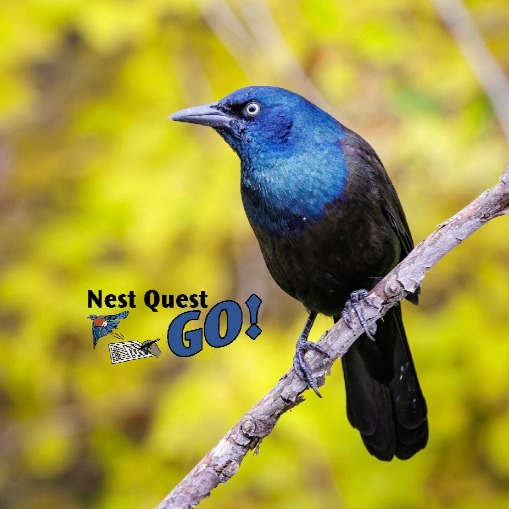
Join the Cornell Lab of Ornithology's Citizen-Science Project, NestWatch in understanding the historical nesting patterns of grackles, including the Common Grackle, Boat-tailed Grackle, and Great-tailed Grackle. Taller and longer-tailed than a typical blackbird, Common Grackles inhabit open woodlands in parts of the eastern United States and southern Canada. In order to spot a grackle, try looking in large flocks of starlings and blackbirds!
These nest record cards are a subset of a larger collection of more than 300,000 nest records that NestWatch is working on digitizing and transcribing. Valuable scientific questions can be asked and answered regarding the nesting behavior of birds over time by examining historical records. We hope to bring new discoveries to light using these previously hidden datasets.