


Finished! Looks like this project is out of data at the moment!
Dear PhenoPulse Volunteer, thank you for your dedication and time on our images. We are making progress. Please note that we have uploaded new images from January to March 2025 taking us to almost 6 months of images. We hope to share some initial results soon. Thank you for your very important contribution.
Also, this project recently migrated onto Zooniverse’s new architecture. For details, see here.
Research
Why is tracking plant life cycle events important?
Plants provide important source of food, fodder and medicinal resources for wild and domestic animals, as well as for several human communities. These materials are sourced directly from leaves, flowers, fruits and without knowing the time they occur, it will not be possible to determine how they will be affected by global climate change.
What do we aim to achieve with this project?
We hope to document some evidence of the timing of leaf production cycle, flowering and fruiting in tropical forests. To help track timing of leaf, flower and fruit production, we have tagged trees and also mounted 8 cameras in the canopy of dry and moist forests in Ghana.
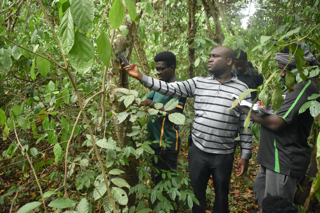
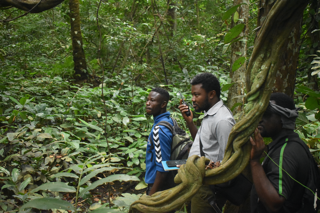
Each camera takes ten pictures daily. We go to the forest every month to download images from the camera. Those images are inspected visually and then uploaded to zooniverse for labelling. We do not use AI for image selection at this stage yet.
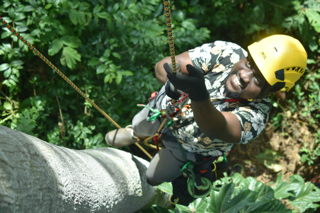
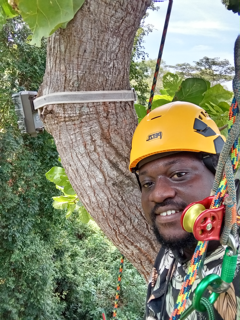
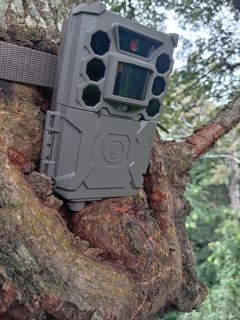
The data from image labelling will inform us on the leaf, flower or fruit events in the canopy and when those events occur. We will then relate these with weather data to understand how weather pattern influences the occurrence of leaf, flower and fruit events.
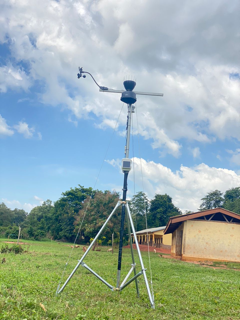
As you begin labelling, you will notice more than one label apply to leafing events in many images. This is the reason shy multiple labels are allowed for selection. The forests where our cameras are located are "semi-deciduous" forests. This means, some of the trees shed their leaves, others do not. Also all the trees do not shed their leaves at the same time. These make it particularly difficult to track the time of leaf events, the more reason we need volunteers to help select which events occur at each time.
It also takes some time, after a few labels, to become very familiar with new leaves (often light green, at branch tips or top of canopy), mature leaves (often dark green in broader or deeper crown area), flowers and fruits. Drying leaves and leaf shedding are relatively easier to differentiate. Also, flowers and fruits in the tropics are very diverse. We are unable to present all the different types. But as you work through the events, they will stand out because the colours of flowers may be distinct from leaves. Fruits if they are big or form in clusters are also easy to see, otherwise difficult if they are simply green and blend in with leaves. We will update the tutorial with more instances of flowers and fruits as our experts spot them in the field and in images.
Do not be discouraged by these limitations! Experts face these challenges too so you are not alone in this. We still count very much on your contributions and see them to be very valuable to our research. Thank you.