


Finished! Looks like this project is out of data at the moment!
Completed workflow: Unearthed from the vault - view never seen wildlife photos near the gates of Zion National Park.
Research
Project Overview
Canyons are extreme environments due to their dramatic topography, intense temperatures, and unpredictable floods. In the American West, millions of global travelers visit these geologic feats to experience their unique landscapes and desert wildlife. Help us explore how mass tourism may change wildlife ranging and foraging behaviors by identifying animals across gradients of human-use environments.
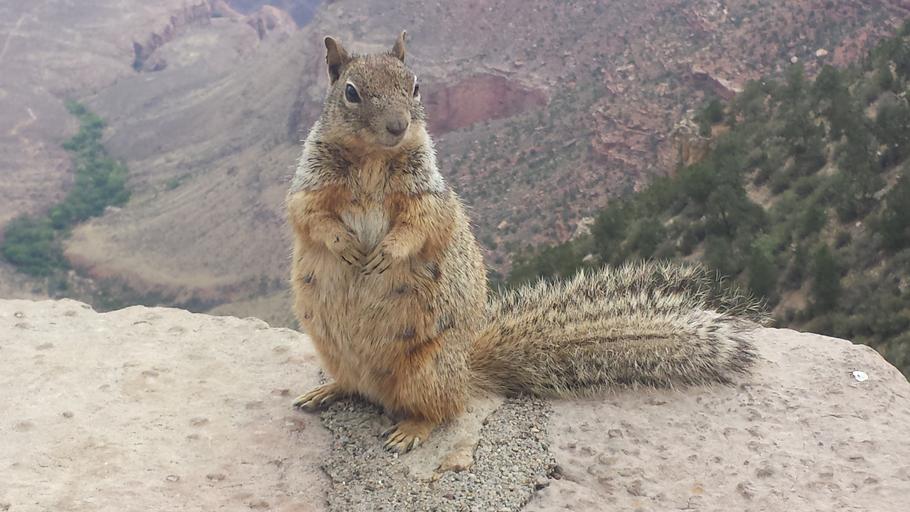
Human presence in natural areas inevitably affects the wildlife that lives there. Tourists may disturb large animals like cougars, cueing anti-predator behaviors that lead to the wildlife avoidance of high human use areas. Alternatively, tourists often attract and habituate small animals like squirrels and chipmunks by providing access to human foods. As tourist areas develop and build necessary infrastructure like restrooms, gift shops, and restaurants, some wildlife take advantage of these buildings for refuge from unpredictable desert conditions. Canyon Critters seeks to understand the ecological impacts of tourism on wildlife by using camera-traps and hair-collecting tunnels to explore both wildlife behavior and diet.
Study Sites

Zion National Park -- managed by the National Park Service, Zion National Park is the third most visited natural park in the U.S. with nearly 5 million visitors every year. The main Zion Canyon, despite being only 15% of the park area, receives 95% of the visitors due to its popular trails (the Narrows and Angel's Landing) and historic Park Lodge, a hotel in the middle of the canyon. Gray fox, mule deer, and rock squirrels are known to frequent these tourist-dominated zones. In addition to the Zion Canyon area, the Kolob Canyons area represents a natural tourism site for primarily backcountry hiking and camping, with much lower levels of visitation.
Town of Springdale -- directly outside Zion National Park, the backyards of Springdale residents offer a peek at wildlife living near more residential infrastructures.
Grand Canyon National Park -- managed by the National Park Service, Grand Canyon National Park is the second most visited natural park in the U.S., with more than six million visitors. We have wildlife monitoring sites in the South Rim, the Inner Canyon near Phantom Ranch, and at the North Rim to capture the variation in tourism intensity.
Eagle Crags Trailhead -- managed by the Bureau of Land Management, Eagle Crags lies on the border of private residences of Rockville, Utah. This trailhead sees infrequent use by visitors for hiking or tent camping.
Complementary Studies
The Zooniverse component of this research is part of a suite of assessments we are conducting to understand small mammal behavior and health. You may see white plastic tunnels in the photos, baited with raisins to lure resident wildlife. In addition to species detections through camera trap image analysis, these tunnels contained non-toxic glue strips to collect hair from any visiting animals. We will analyze using mass spectrometry to measure isotope levels. These isotopic values of 13 carbon and 15 nitrogen will help us infer the level of human food in the animal's diet. Additionally, we are collecting scat to assess the parasites of the local small mammal communities.

The Bigger Picture
Nature-based tourism is on the rise, with U.S. National Parks now receiving more than 330 million visitors per year. Park managers need scientific evidence to inform visitor management and animal conservation strategies. The current National Park deficit estimated at $11 billion leaves research funds slim, with most efforts focused on endangered or charismatic species. Despite being the most common animals to interact with visitors, squirrels and chipmunks are often the least studied. Evidence is needed to mobilize funding and prioritize park areas for management. This project utilizes a novel combination of methods from anthropology, ecology, and veterinary medicine to address human-wildlife interactions in a popular nature tourism destination. Ultimately, this project aims to inform on how tourists and wildlife can coexist in order to fulfill the National Park's dual purpose of environmental preservation and human recreation.

Visitors to Zion National Park, data from NPS IRMA.