


Finished! Looks like this project is out of data at the moment!
The classifications of the largest set of artworks (previously the English set) is nearly finished. Thank you all for your contributions!!! We have now made the small (originally Dutch) set also available in English.
Research
Fish are important for humans as a food source, but also for biodiversity.
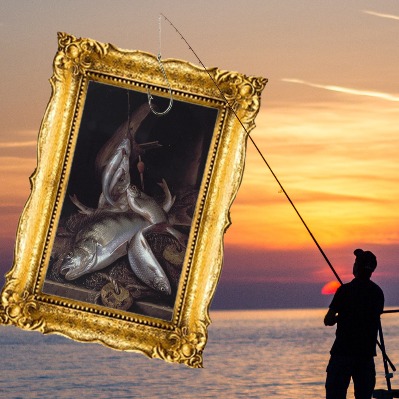
We can learn more about biodiversity (the presence of many plant and animal species) and the history of our culture by looking at the use of fish in the past. Before the study of animals was real science, people (fishers, medics and collectors) exchanged information about animals in collections, objects and images. We extract information from these ancient objects and combine that with a study of the important fish books of the 16th-19th centuries (e.g. the works of Belon, Artedi, Willughby, Rondelet and Salviani). Within this project people from art and social science work together with biologists and fish experts. The result is a gathering of information about fish in the past, which other people will have access to. In the end, this information may help to throw new light on issues of long-term European biodiversity. The project will collect a large amount of information about European aquatic animals in the 16th -19th centuries: concerning species, names, pictures, spatial distribution, and uses/functions. Art is an underrated source of information. Between 1500 and 1850 fish were a popular subject for painters. Still-lives and market scenes give an idea of the use of fishes in the past. These old paintings learn us which fishes were caught, sold and consumed. Combined with information about biodiversity, we will be able to study the link between fish consumption, biodiversity and major events in the past.

We aim at creating a large gathering of information extracted from fish art. Within this gathering there will be information about the painting such as the date of the painting as well as information about the fish species, and commercial use. With this information, it will be possible to link the occurrence of fish species on paintings and their commercial purpose to certain periods in time. After the project has finished, our project will for the first time provide a vast, unique fund of information to serve research purposes of other scholars and bio-scientists. It will be important in particular to the long-term study of aquatic biodiversity in Europe (1550 until 1880). Variation in species distribution found in sources from the past may provide (further) evidence of climatic change (e.g. the "Little Ice Age", which began c.1550), pollution, migration of fish , etc. Together with other types of evidence, this historical information can become important to current debates on maritime and freshwater biodiversity, overfishing, and the (re-)introduction of locally extinct species. Another important question we will be able to answer with this gathering of information, is whether artists painted species that were easily available, whether they concentrated on rare species, how often they painted exotic species that did not occur in their own country, and whether they combine species from different locations in one piece of art.
You can help!
You can help us by giving the fish from the past a name. We have already selected still-lives, prints and market scenes with fish, but the species names are unknown. We have included paintings from the two major art institutions from the Netherlands. Together this includes already more than 2000 pieces of art, and possibly more will be added later. Many of the paintings involve more than one species. This means that we cannot identify them all by ourselves. Help us identify the species so we can learn more about our cultural history and changes in the biodiversity of fishes.
