



Check out our new workflow: "Fermi: Pulse shapes"! It includes over 2000 new GRBs from the NASA Fermi Gamma-Ray Space Telescope. Please help us classify these GRBs! (The Fermi workflow is only available in English at this moment.)
Research
Welcome to the Burst Chaser project! In this project, we need your help on identifying signatures of gamma-ray bursts (GRBs), one of the most energetic explosions in the universe!
What is a Gamma-ray Burst?
Credit: NASA Goddard Space Flight CenterGamma-ray bursts (GRBs) are some of the most energetic explosions in the universe. These bursts release more energy in their 10 second duration than the entire 10 billion year lifetime of our sun. Luckily these bursts happen very far away and are thus not harmful to Earth, but they are super interesting for scientists and astronomers for future research.
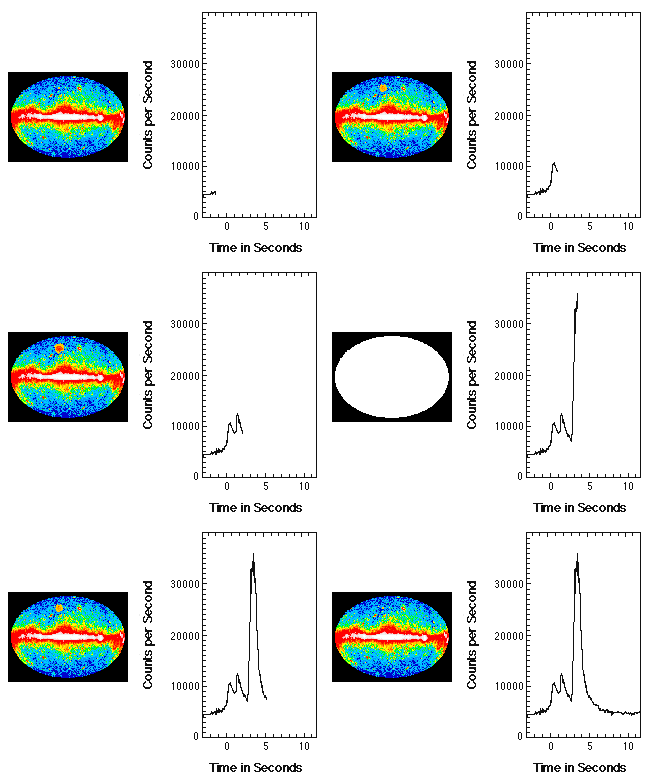
Images credits: NASA/CGRO/BATSE
The animation above showcases a Gamma-Ray Burst (GRB) detected by a NASA space telescope! The telescope is called the Burst And Transient Source Experiment (BATSE) onboard the Compton Gamma-Ray Observatory. The telescope detect gamma rays, which is a part of the light spectrum, as described in the figure below.
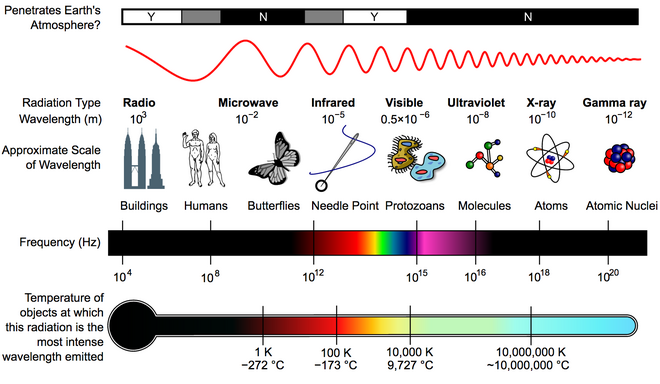
Credit: Creative Commons
Gamma-ray bursts emit light (also called photons) in all wavelengths. But the first emission is usually seen in gamma rays, which will be the focus of this project. BATSE collects information on the gamma rays it sees over time. Using that information, we can create a movie of the gamma ray sky consisting of varying colors that indicate the intensity of the gamma rays. The prominent white and red line running across the center of the image represents gamma ray emissions from our Milky Way galaxy. The exceptionally brilliant spot above the Milky Way plane represents the GRB. While our galaxy emits a significant number of gamma rays, a GRB produces tons of gamma rays that it can even outshine our whole galaxy during the ~10 s explosion and overwhelms the telescope detectors causing the entire image to go white.
On the right side of the animation, you'll find the graph for the animation that we use to track the amount of gamma rays we see over time. The graph's vertical axis is a measure of how many gamma ray photons the telescope detects, with higher points on the graph indicating more gamma ray photons. When a GRB erupts we see a sharp peak in the graph. This graph is what we refer to as the "light curve" of the GRB, offering insights into how the physical mechanism that creates these bursts.
As part of this project, you will categorize these distinctive peaks. Helping us gain a deeper understanding of the phenomenon behind gamma-ray bursts.
Astronomers think GRBs are produced by some extreme astrophysical events related to stars and black holes. These energetic events will create strong jets of particles and photons with extremely high energy. These pulses give researchers information on the phenomenons that create these bursts, furthering scientific discovery. The figure below captures our current understanding of how these photons are created in a gamma-ray bursts.
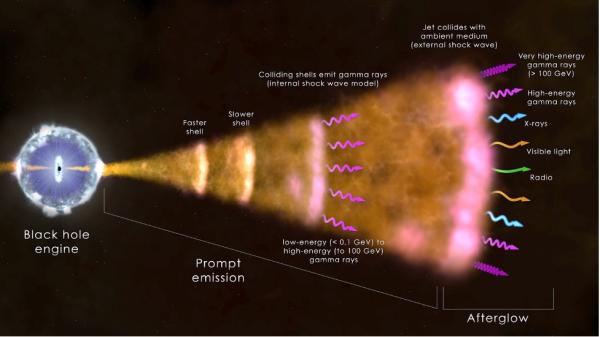
Figure credit: NASA/Goddard Space Flight Center/ICRAR.
More specifically, astronomers now know that GRBs are likely to form by two main physical mechanisms. The more common mechanism is through the collapse of massive stars. When massive stars run out of their fuel to produce energy, they collapse due to gravity and explode as supernovae. Some of these supernovae also release intense gamma-ray jets, as shown in the animation below (credit: NASA Goddard Space Flight Center).
Credit: NASA Goddard Space Flight CenterThe less common mechanism of forming GRBs is through merging of two neutron stars or merging of a neutron star and a black hole, as shown in the animation below (credit: NASA Goddard Space Flight Center). These events can also produce a phenomenon called gravitational waves. Although the phenomena was predicted by Einstein's general relativity over 100 years ago, astronomers finally confirmed their existence in 2015 thanks to the newly upgraded gravitational-wave detectors LIGO and VIRGO!
Credit: NASA Goddard Space Flight CenterWhy are astronomers so interested in GRBs?
Because GRBs are so bright in gamma rays, we can see them throughout the entire universe, from nearby galaxies to the very distant universe. Because light travels with a finite speed, it takes a long time for light to travel from the distant universe to reach us, and thus when we see things from the distant universe, we are looking back in time. In fact, gamma-ray bursts are one of the very few events that can be detected directly out to the era when the first stars were expected to form. GRBs are thus powerful tools for studying the early universe and learning how the universe evolved to its current state.
Moreover, since GRBs are created in the most extreme environments in the universe - supernovae, neutron stars, and black holes - they are useful to study physics in these extraordinary environments, which are very hard to create on Earth.
The Neil Gehrels Swift Observatory
Data for the "Pulse shapes", "Where are pulses?", and the optional training workflows come from the Neil Gehrels Swift Observatory, also known as Swift. The figure below shows what the telescope looks like.
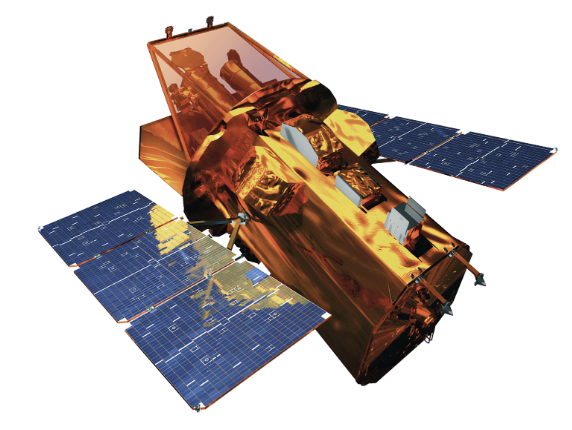
Credit: NASA Goddard Space Flight Center
Swift is a multi-wavelength space telescope, meaning that it can observe GRBs simultaneously across the light spectrum from optical to UV to gamma-ray wavelength. The data used in this project comes from the high-energy (hard X-ray to gamma ray) instrument called the Burst Alert Telescope (BAT). The BAT can observe ~1/6 of the entire sky in a single pointing and provide great localization of the burst. The localization tell astronomers exactly where the burst is, and thus allow astronomers to gather further information of the GRB, such as its distance and host galaxy information.
Swift was launched in Nov. 20, 2004, and it has been monitoring the universe and detecting GRBs for 19 years. The video below shows a summary of Swift's GRB discovery when it observes 500 GRBs. To date, Swift has seen more than 1600 GRBs!
Credit: NASA Goddard Space Flight CenterThe Fermi Gamma-ray Space Telescope
For the Workflow "Fermi Gamma-Ray Bursts", data come from Fermi Gamma-ray Space Telescope, also known as Fermi. Here is a picture of Fermi.

Fermi has two instruments onboard, the Gamma-ray Burst Monitor (GBM) and the Large Area Telescope (LAT).Fermi observes light with a very broad energy range. More specifically, GBM can see photons in energy range from 8 keV to 30 MeV, while Swift/BAT sees photons from 15 keV to 350 keV. In addition, Fermi can see almost the entire sky at any time (except the part of the sky that is covered by the Earth). As a result, Fermi has detected over 3500 GRBs since it launched in June 11, 2008!
Although Fermi detects many more GRBs than Swift, the Fermi GRBs are not very well localized. Therefore, it is important to combine the information of both Fermi and Swift to get a more complete picture of GRBs.
In the Workflow "Fermi Gamma-Ray Bursts", we need your help classify the pulse structures for these Fermi GRBs. Because it is harder for Fermi to localize these bursts, astronomers can only estimate which photons come from the GRB, and which photons come from other background sources. Therefore, sometime you may see the background level diverges from the zero line because of imperfect background subtraction.
Here is a short video if you'd like to learn more about Fermi/GBM:
Why We Need Your Help
We need your help to flag and identify GRBs with specific pulse shapes (see field guides for more information of these pulse shapes) that will help astronomers solve the mystery of their physical origins. Your eyes can accurately classify pulse shapes and other patterns in the data that we haven’t yet been able to teach a computer to spot. Your classifications of these GRBs will help astronomers pinpoint the origins of these bursts and advance our knowledge of these mysterious and energetic events in the universe.
If you are interested in learning about more details of how your work will help astronomers learn about the physics in GRBs, check out the content inside the FAQ link above.
What happens if I'm not sure of the category?
You may find the pulse shapes of some GRBs remain ambiguous and it may not be easily fit in to one category. This is exactly why we need your help as a citizen scientist. The pulse shape identification can be subjective and even professional astronomers may not easily come to an agreement sometime! Use your best judgement to determine the category that you think best matches with the examples provided in the Field Guide, and stay consistent with your idea of what each category is tailored by the information we provide.
Acknowledgment
This project is supported by NASA's Citizen Science Seed Funding Program (CSSFP).
Code of Conduct
The Burst Chaser project strives to create a collaborative and inclusive environment. When participating in discussion on the Burst Chaser platform, please be respectful to others, especially those with different viewpoints and experiences. For more guidelines, please refer to the Zooniverse Talk Community Standards.