


Welcome! This project recently migrated onto Zooniverse’s new architecture. For details, see here.
You can do real research by clicking to get started here!
Zooniverse Talk
Chat with the research team and other volunteers!
SuperWASP Variable Stars Statistics
View more statsAll Time Stats
Active Stats
Active stats provide information about currently active workflows and subjects.
Message from the researcher

Stars are the building blocks of the baryonic Universe and determining stellar parameters is a cornerstone of astrophysics. Variable stars are key to this, as their time domain signal may be used to probe the dynamics or structure of a stellar system.
Andrew NortonAbout SuperWASP Variable Stars
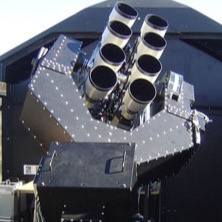
SuperWASP — the world's most successful ground-based survey for transiting exoplanets — used wide-field robotic telescopes to continuously image the night sky. Brightness measurements were obtained from ~105 stars per image, every few minutes, every night, and built up into lightcurves for each star. Over 10 years, SuperWASP generated >30 million lightcurves of bright stars across the entire sky (avoiding the Galactic plane where stars are too close together to be resolved). Each lightcurve contains ~20,000 data points.
As well as allowing searches for transiting exoplanets, SuperWASP lightcurves can reveal many variable stars. These include stars displaying pulsations or outbursts, as well as eclipsing binary stars or stars displaying rotational modulation. A period-search has identified >1.5 million possible periods in around 750,000 objects. The purpose of this project is to identify and classify the folded lightcurves of all objects with measured periods as either eclipsing binary stars, pulsating stars, rotationally modulated stars, or simply junk.

This project was developed with the help of the ASTERICS Horizon2020 project. ASTERICS is supported by the European Commission Framework Programme Horizon 2020 Research and Innovation action under grant agreement n.653477