


Thank you for your efforts! We've completed the classification stage for this project! Please join us in our new project - https://www.zooniverse.org/projects/wildintel/european-camera-trap-project.
To browse other active projects that still need your classifications, check out zooniverse.org/projects.
Research
THE PROJECT
Ecologists and wildlife managers often study the size, distribution and dynamic of animal populations using automated camera-traps. But, while the cameras can potentially take huge amounts of images, it doesn't exist an automatic method for extracting the information of these images. Normally, the identification of the photographed species and the digitization of the data are carried out by technicians and it is so laborious that most of the knowledge is not exploited. Using artificial intelligence, we can classify, accurately and with low effort, large numbers of images from camera traps and automatically digitize the information on them. We aim to develop a tool for the census and monitoring of biodiversity, that helps wildlife researchers and managers in their purposes of knowing and protecting our nature. Such a tool will be made available, in the short term, to the wildlife managers and researchers working in the protected areas of the Iberian Peninsula.
THE IBERIAN PENINSULA
The Iberian Peninsula is one of the most biodiverse regions in Europe. It houses 50% of the plants and the terrestrial vertebrate species of the continent. The importance of this region for the conservation of biodiversity is widely recognized. The 80% of its territory is part of one of the Biodiversity Hotspots of the world, and on its territory, there is the 20% of the areas protected by the European Union in the Natura 2000 network.
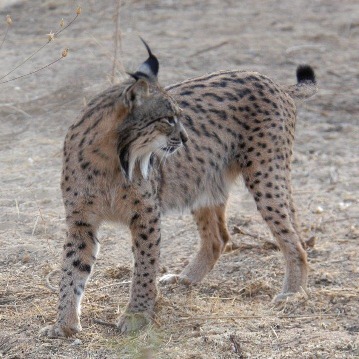
Regarding wildlife, in the Iberian Peninsula there are 66 species of native freshwater fishes, 30 species of amphibians, 70 species of reptiles, more than 300 species of breeding birds, and 137 species of mammals. But if the Iberian Peninsula stands out for something, it is for its high rate of endemism. Much of the autochthonous vertebrates here are endemic, including large species of mammals such as the Iberian lynx, Lynx pardinus, and the Iberian ibex, Capra pyrenaica.
PROJECT SCIENTIFIC CHALLENGES
- To design and train a convolutional neural network (CNN) for the recognition of animal species from the Iberian Peninsula.
- To create a program for the automatic recognition of animal species in photo-trapping pictures using the CNN.
- To improve CNN by re-training with new images.
WE NEED YOUR HELP
We need your collaboration to identify the photo-trapping pictures. Most of the images have been given to us by people interested or involved professionally in camera trap photography. With your help in identifying the species, a tool for the census and monitoring of biodiversity will be developed and will be used to help wildlife researchers and managers in their purposes of knowing and protecting the biodiversity of the Iberian Peninsula.