


Research
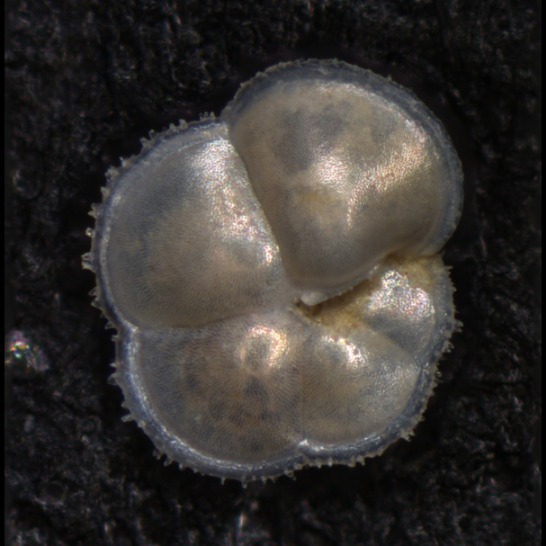
Planktonic foraminifera (or "forams" for short) are single-celled organisms that live in the open waters of the world's oceans. One of their most striking features is an external shell made out of calcium carbonate, also known as a "test." Forams are abundant and widespread, making them an unsung hero of many important industries and research avenues. For instance, fossil forams are used to reconstruct climate and ocean chemistry in the past, and are also extensively used in oil exploration.
We are identifying the species of forams sampled from the Atlantic Ocean. When done, we will have made the largest image dataset of modern planktonic foraminifera to date. This will be a valuable reference, teaching, and research tool. This dataset will also allow our community to use machine learning methods to perform automatic foram identification and to ask a range of scientific questions.
We have already identified tens of thousands of forams from the collections of the Yale Peabody Museum and the Natural History Museum, London thanks to 20+ experts in planktonic foraminifera. We are now releasing the remaining images in our dataset for the public to identify. A training module and example images for the previously identified forams can be found at the Endless Forams web portal. We highly recommend that classifiers train themselves using the Endless Forams portal before attempting to classify images on this Zooniverse project. More information and images of forams can also be found at the pforams@mikrotax website.
Background image: Plate 81 from Ernst Haeckel's Art Forms In Nature, "Various species of Foraminifera (a type of marine Protozoa)"