


FAQ
Q: What are planktonic foraminifera?
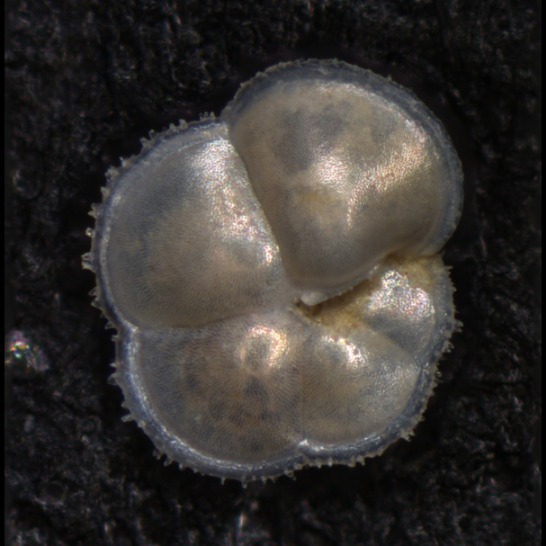
A: Planktonic foraminifera (or "forams") are single-celled organisms that live in the world's oceans. They have a shell made out of calcium carbonate called a "test". The images that you see on this project are of the tests left behind by preserved foraminifera from various sites across the Atlantic Ocean. You can learn more about planktonic foraminifera here.
Q: Why are planktonic foraminifera important?
A: Planktonic foraminifera are found in high numbers all over the world. As a result, they can be used for many interesting applications, such as studying ocean chemistry and exploring sediments for oil deposits. Because forams have an unusually complete and abundant fossil record, they can also be used to reconstruct past climates and environments.
Q: What will the identifications here be used for?
A: It is important for researchers to be able to distinguish between different species of forams. Being able to do this quickly and accurately would allow scientists to generate large datasets to better answer their questions about climate, ocean chemistry, biological communities, etc. One way to do this is to train computers to do the identification for us. However, this requires many images with associated species labels as input. We would like you to help us generate more of this data!
Q: Help! How do I tell all these weird blobby things apart??
A: Don't despair! You can check out the field guide (tab to the right of the screen), or we highly recommend that you go to our database of images identified by foram experts at Endless Forams. There you can see many examples of individuals from each species. There's even a quiz to help you learn!