


Thank you for your efforts! This project's classification effort is complete! To browse other active projects that still need your classifications, check out zooniverse.org/projects. For results from this project, see the 'About/Results' page.
Research
Why students?
The move to university is a significant life change for many, providing autonomy of food choice and behaviours, as such, this transition has been identified as a key moment of change (a disruption to established behavioural routines and habits) which can influence long-lasting changes in relation to a range of food behaviours. Enrolment figures for the academic year 2020/21 suggest that in that around a quarter of 16-24-year olds may be in this ‘moment’, with 2.7m students enrolled in 2020/21 (HESA 20/21).
However, there is a lack of research into food safety behaviours amongst UK students. A small-scale study demonstrated that students lack food safety knowledge and frequently self-report food safety malpractice when preparing food (Evans, 2016). Poor food safety practices have been identified in non-UK student populations. In the UAE, sponges in halls of residence kitchens were shown to contain high levels of potentially pathogenic bacteria (for example, mesophilic aerobic bacteria, yeasts and moulds), sponges were often used to clean multiple surfaces, including the kitchen sink, fridge, and in some cases, the kitchen floor, in addition to cleaning dishes. Sponges were typically kept for one (58%) or two months (32%), and never sterilised (70%) (Osaili et al., 2020).
Research aim and impact
Knowing more about students will enable us to identify risky food safety and hygiene behaviours, develop effective communications to address risky behaviours, inform policy, and potentially foster long-term good food safety and hygiene behaviours in a key cohort of people.
What has our wider student kitchen research involved?
Step 1: Co-creation sessions - students helped us to identify the unique experiences and challenges regarding food safety, food security, diet and other food-related topics which university students living in halls of residence and shared houses experience; to review the draft survey and to develop survey questions which capture the experiences and challenges identified. Below is a heat map of the areas of the kitchen that the participants identified as a risk to food safety.

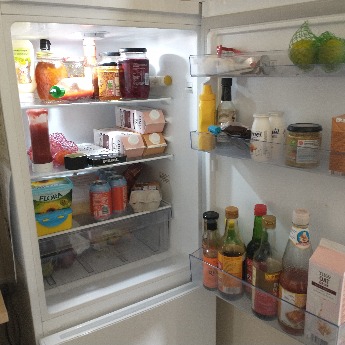
Step 2: Online survey - a representative sample of undergraduate university students were recruited across England, Wales, Northern Ireland, and Scotland. The survey included a range of topics including knowledge, attitudes, behaviour relating to food safety, food security, diet and other food-related topics which university students living in halls of residence and shared house experience. Students had the option to submit photos of the sink and fridge at their term-time accommodation (like the one below!)

We have recently published an interim report on the findings from the co-creation sessions and online survey. The report evidences some incredibly interesting findings on university students' experiences of food safety behaviours, challenges of shared kitchens and food insecurity in an under-researched demographic group. Click here to give it a read if you're interested!
Step 3: Citizen science (this is where you come in!)- citizen scientists will help us to explore the fridge and sink images to gain a deeper understanding of the food safety and hygiene behaviours of students. Collectively, you will help us to code the data from thousands of images into tangible statistics which paint a representative picture of good/ bad kitchen behaviours. With these findings, we can inform policy decisions, shape guidance and foster good food safety and hygiene practices amongst a key demographic group (that is often overlooked).