


Congratulations to Francis Halzen on the Nobel Prize in Physics for his work for IceCube! Now YOU can help with IceCube science!
了解更多You’ll be asked to choose between two options for the signal shown in the animation: a track that moves in a linear cone shape or a cascade that looks like a growing sphere. This task helps us analyze our data for understanding more about mysterious particles called neutrinos and their oscillations.
Zooniverse Talk
和研究团队以及其他志愿者聊一聊吧!
Name that Neutrino! 统计数据
查看更多统计数据All Time Stats
Active Stats
每一次点击都很重要!加入 Name that Neutrino! 的社区来完成此项目,并帮助研究人员得出重要结果。点击“查看更多统计数据”以了解更多统计信息。
来自研究人员的消息
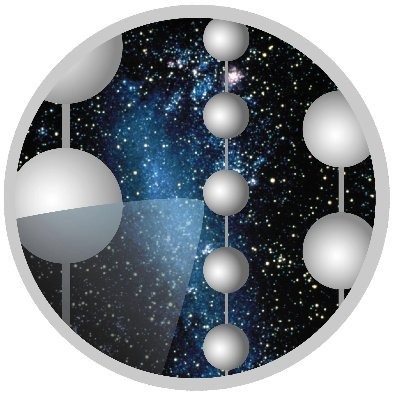
Our long-term goal is to have people and artificial intelligence working together to advance the field of neutrino astronomy.
Name that Neutrino!关于 Name that Neutrino!
Every second, around 100 trillion neutrinos pass through our bodies unnoticed. At the South Pole, the IceCube Neutrino Observatory detects these elusive particles and works to identify their astronomical origins. This requires a huge amount of data, with a terabyte of data recorded every day. This is where you can help!
When a neutrino interacts in ice, a signal or light pattern is produced. We're asking you to watch a clip of the signal and classify the shape. By doing this, you will help IceCube eliminate background signals, and your contributions will also be compared to machine learning predictions to help train and improve AI algorithms.
IceCube is the largest particle detector in the world and allows us to address several unanswered questions in physics, from the origin of cosmic rays to the nature of dark matter and neutrino oscillations.