
Finished! Looks like this project is out of data at the moment!
Welcome! This project recently migrated onto Zooniverse’s new architecture. For details, see here.
Research
The Milky Way Satellite Dwarf Galaxies
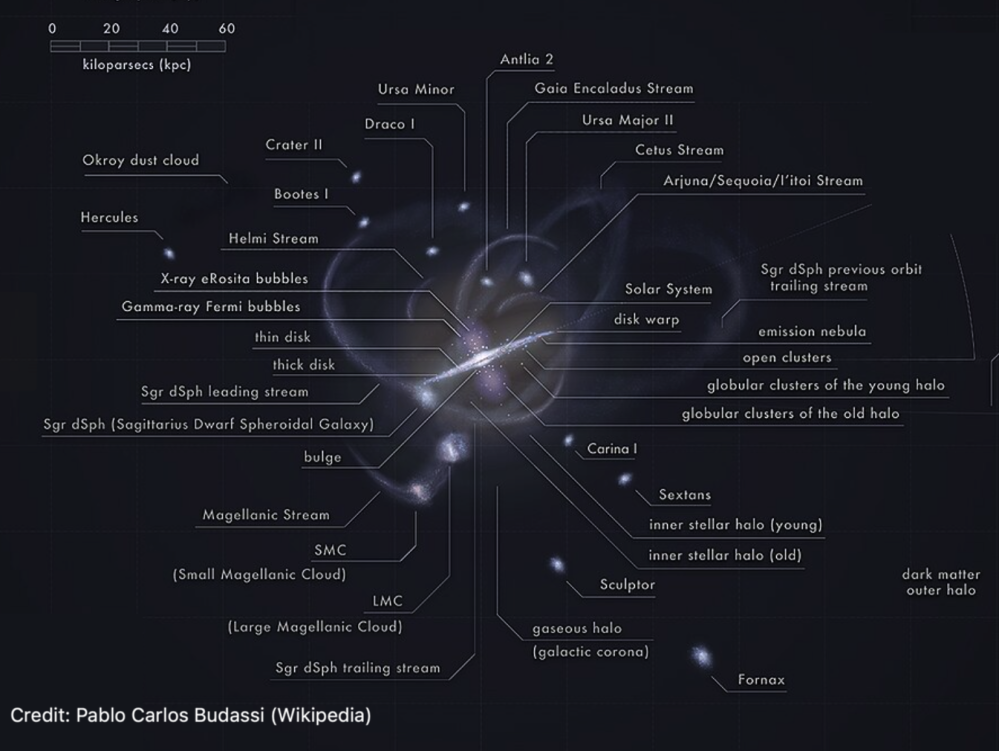
Below are a few satellite galaxies of the Milky Way. These galaxies orbit the Milky Way in the same way that planets orbit the Sun. They span a wide range of sizes and brightness levels. Some systems, like the Large Magellanic Cloud and the Small Magellanic Cloud, are visible to the naked eye, while others can only be discovered using the largest telescopes in the world. We are currently trying to find the faintest companions of the Milky Way.

Our team has been a huge contributor to dwarf galaxy discovery. Through DES and DELVE, our team has discovered the following dwarf galaxies (21): Reticulum II, Eridanus II, Tucana II, Horologium I, Pictor I, Phoenix II, Grus II, Tucana III, Columba I, Tucana IV, Reticulum III, Tucana V, Cetus II, Centaurus I, Eridanus IV, Bootes V, Virgo II, Leo Minor I, Pegasus IV, Aquarius III, Leo VI. We are hoping that you can help us find more dwarf galaxies!
You can find a collection of all known satellite dwarf galaxies through this wikipedia link.
Why are Dwarf Galaxies Important?
A dwarf galaxy is essentially exactly what it would seem: a small galaxy. We are especially interested in those that orbit the Milky Way, known as satellite galaxies, since they are the closest to us. These systems are particularly fascinating because they are the most dark matter-dominated galaxies that have been discovered.
Dark matter is a mysterious substance that makes up about 27 percent of the energy content of the universe. However, we still do not know what it is made of. This is because dark matter is invisible, and we can only learn about it through its gravitational pull on regular matter such as stars and galaxies.
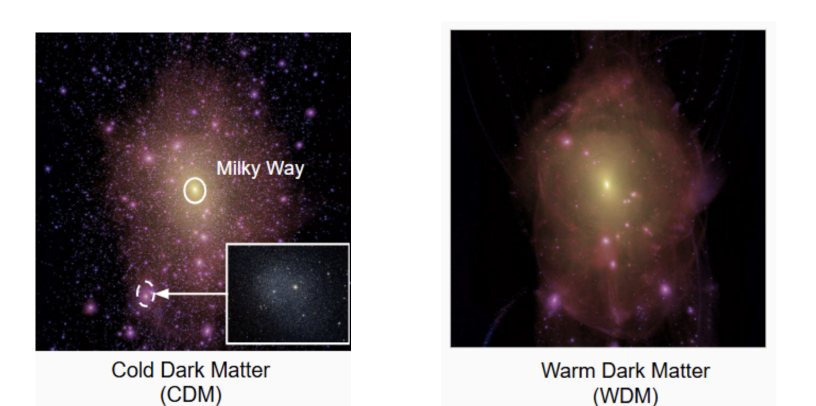
Scientists have proposed many different theories about the nature of dark matter. These theories predict different number of satellite galaxies around the Milky Way. Thus, by finding all of the satellite galaxies around the Milky Way, we can test these predictions and figure out which model of dark matter is most accurate. For example, below we show predictions from two simulations: one based on Cold Dark Matter and the other on Warm Dark Matter. The Cold Dark Matter simulation predicts many more satellite galaxies than the Warm Dark Matter simulation. Therefore, if we find a high number of satellite galaxies, it would allow us to rule out Warm Dark Matter as the correct model.
The implementation of new telescopes, technology, and hopefully, tons of volunteers from all over the world has allowed our understanding of dwarf galaxies to greatly expand in recent years. We now know of around 65 Milky Way dwarf galaxies, with many of them contributing to our broader understanding of the universe. In addition to helping us study dark matter, these systems allow us to delve deeper into topics such as galactic archaeology and stellar physics, helping us answer fundamental questions like, "What is the smallest possible galaxy?"
About DELVE
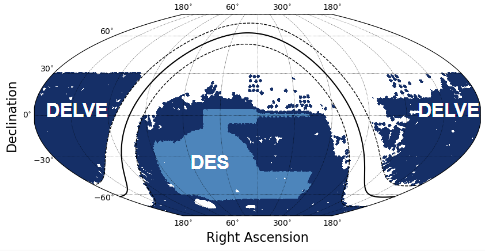
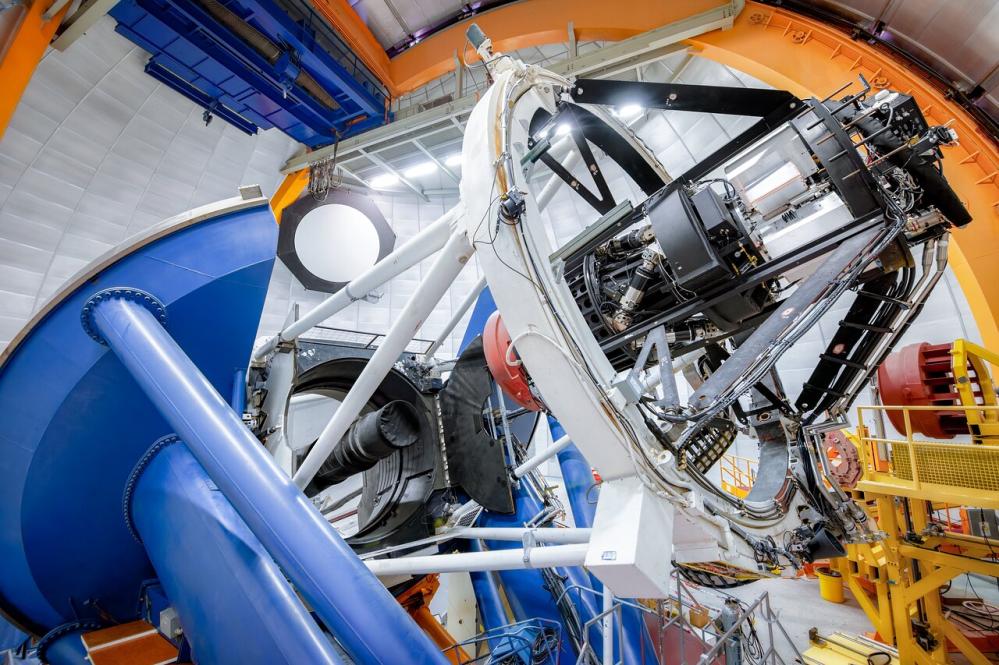
The Dark Energy Camera Local Volume Exploration Survey (DELVE), is an international collaboration that seeks to understand the faintest and most dark matter-dominated galaxies. Using the 4-meter Blanco Telescope at Cerro Tololo Interamerican Observatory in Chile, DELVE is imaging the entire high-Galactic-latitude southern sky, as seen by the imaging map below.
The Cerro Tololo Inter-American Observatory (CTIO) is located outside of La Serena, Chile.
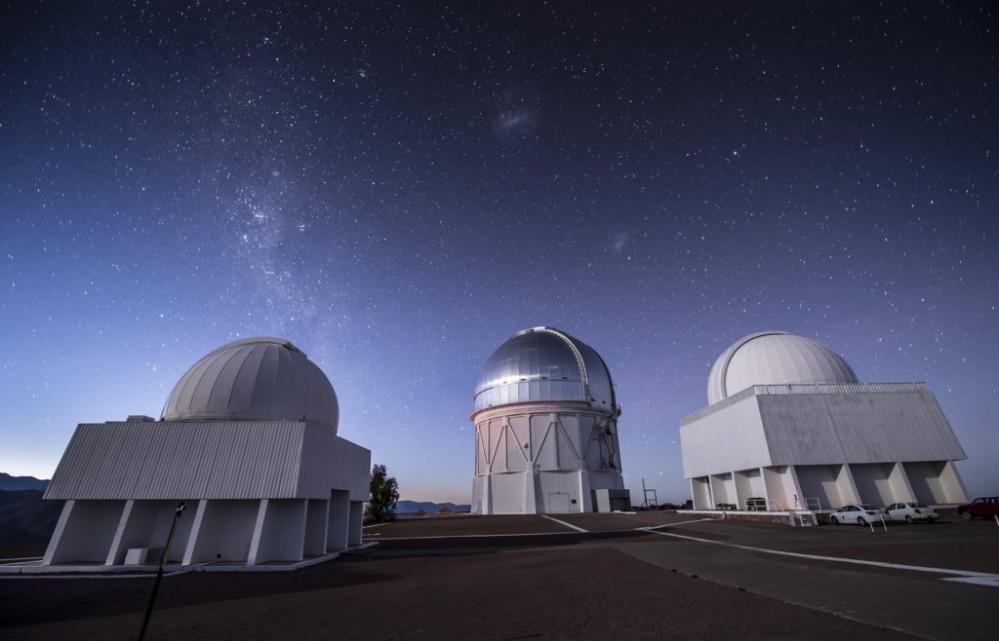
CTIO operates the Víctor M. Blanco 4-meter Telescope, featuring the Dark Energy Camera (DECam), a high-performance, wide-field CCD imager that was installed in 2012.
Our Zooniverse Process
However, the galaxies that we are interested in are so faint that it usually outshined the more numerous Milky Way stars in the foreground.
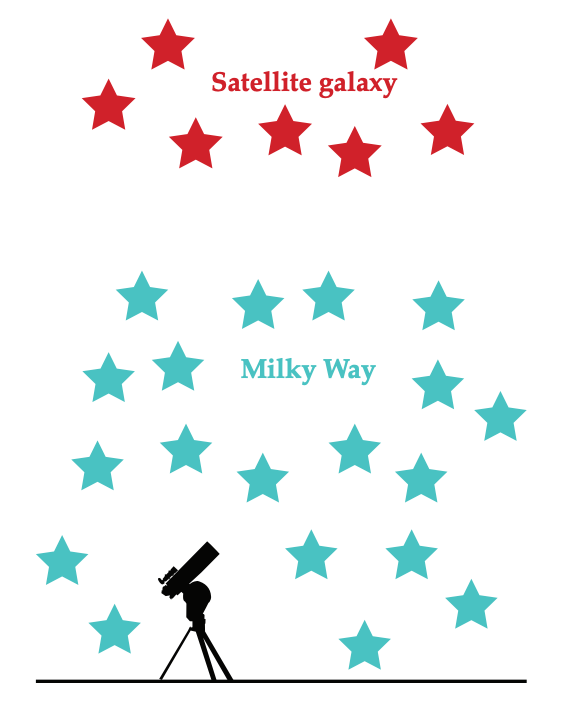
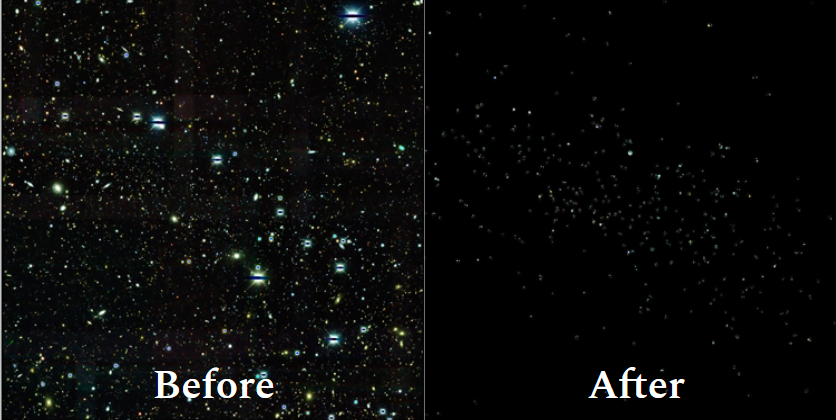
To overcome this challenge, we use an isochrone filter. An isochrone is a tool that helps scientists predict the expected brightness and color of stars in a galaxy of a given age and composition. By filtering out stars that are not consistent with the isochrone, we can remove foreground Milky Way stars that might otherwise obscure a faint dwarf galaxy. This allows us to reveal galaxies that are hidden in the background. The following images show a dwarf galaxy, Reticulum II, before and after removing stars that do not match the isochrone.
To create the stellar density plots shown in the diagnostic images, we start by converting each star into a single point on the map. We then calculate how many stars fall within different regions of the image. Areas that appear darker in the stellar density plot represent regions with a higher concentration of stars. The GIF below demonstrates how fitting an isochrone to the stars and hiding those that do not match allows us to uncover over-densities that would otherwise be hidden by foreground Milky Way stars. By shifting the isochrone brighter or fainter (up and down on the diagram), we can effectively scan for dwarf galaxies at different distances.
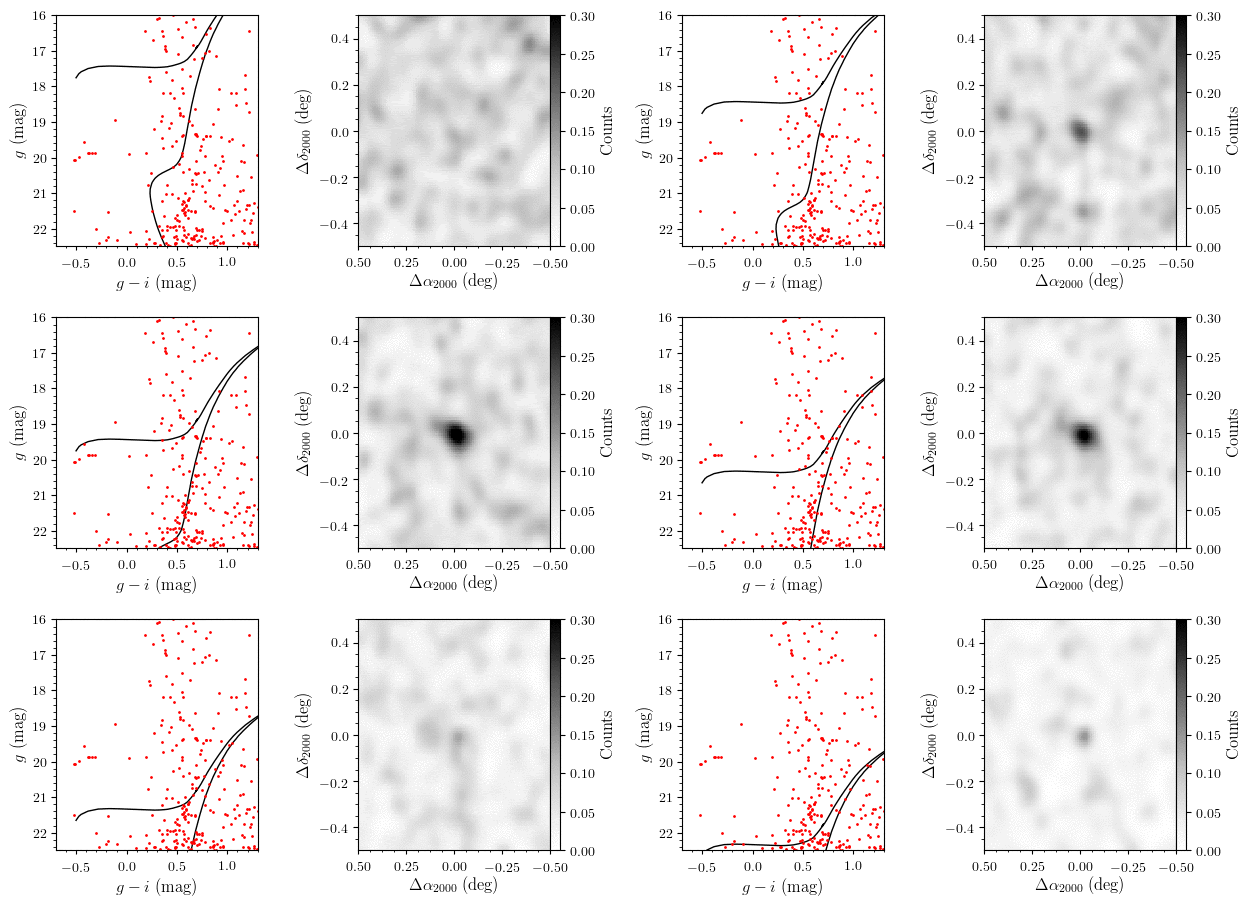
After reviewing these diagnostic plots on Zooniverse, we select the most promising candidates and request follow-up observations with larger telescopes. These follow-up images go deeper, helping us confirm whether the candidate is truly a dwarf galaxy. We're looking for help in sifting through these potential dwarf galaxy candidates.
There’s a lot of false positives (or junk), but also a real chance to discover something new and exciting!
That's where you come in!