


Finished! Looks like this project is out of data at the moment!
All company descriptive book cards have been transcribed! Go to the talk section and click on "Future of the Project" in the General Discussion section for a full statement
FAQ
- . . . . . GENERAL PROJECT QUESTIONS . . . . .
- Who were the United States Colored Troops?
- Which documents are we transcribing?
- Where do these documents come from?
- What will be done with the information that we are transcribing?
- . . . . . GENERAL TRANSCRIPTION QUESTIONS . . . . .
- People keep mentioning looking up the rest of a soldier’s cards. How do I do that?
- Help! I can’t make heads or tails of this card!!!
- How do I post in the Notes section of the Discussion Board?
- I made a mistake! What do I do?
- The card says there’s more material on the other side of the card! What do I do?
- This card does not look like it fits the fields for "Descriptive book"
- What is this "Field Guide" you speak of?
- Ack! I wanted to talk about this cool/frustrating/etc. card but forgot to hit the "Talk" button!
- I'm looking in the rest of the cards and they're clearly describing two separate people. What should I do?
- The metadata for this card disagrees with what this card says.
- A big chunk of data is missing from this card but I can see it on the other cards! Should I write it in?
- . . . . . NAME/CO./AGE/HEIGHT PAGE . . . . .
- There’s no company field.
- Some persnickety enlisting officer gave me some weird fraction of an inch that’s not in the dropdown.
- . . . . . PHYSICAL DESCRIPTION/WHERE BORN/OCCUPATION PAGE . . . . .
- Should I spell out abbreviations in the description?
- There are words in the physical description that I can't make out/that don't make sense.
- . . . . . PLACES . . . . .
- There are extra dates and places between the When and Where lines. What do I do with them?
- I see city and state but not county. Should I be looking up what county the city is in, or just transcribing the fields actually included on the card?
- This card only has the city, not the state.
- This place isn’t in the dropdown menu!
- There isn't a city/county with this name in this state.
- I have no idea what this abbreviation in this place means. Help?
- I think this place was in a different state during the Civil War. Should I use the current state or the 1860s state?
- . . . . . REMARKS FIELD . . . . .
- What do the ditto marks in a date mean?
- There’s a section that’s in a [different hand/different writing implement/typewritten/stamped]. What do I do with it?
- I’m having trouble getting the names of the battles. Any suggestions?
- Do you want name of 'Copyist' included in Remarks field?
- What kinds of situations are these cards recording? (Or: HALP! I don't know this vocabulary or these abbreviations or anything and the handwriting's terrible and there's a block of text and HALP!)
. . . . . GENERAL PROJECT QUESTIONS . . . . .
Who were the United States Colored Troops?
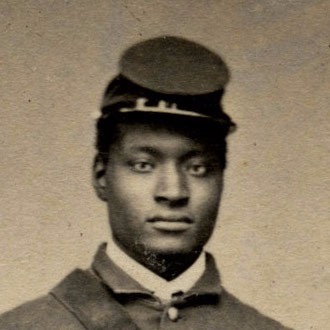
The United States Colored Troops (USCT) were regiments of African Americans who fought in the Union Army during the American Civil War. The USCT was officially formed on May 22, 1863, but many volunteer regiments began to form in 1862, such as the First South Carolina and North Carolina Volunteers, and the Corps d'Afrique in Louisiana. By the end of the war the USCT consisted of 138 infantry regiments, 15 artillery regiments and 7 cavalry regiments. Many African Americans also fought in racially mixed units of the US Navy. While the total number of Africans Americans who fought in the Civil War is unknown, historians estimate that number to be between 180,000 and 220,000, and that the majority had been living in the South as slaves at the start of the war.
For more info on the USCT see the African American Civil War Museum and this 4 minute introductory video:
Which documents are we transcribing?
Our goal is to transcribe all the useful information from the Compiled Military Service Records (CMSR) of the United States Colored Troops. The CMSR were themselves transcribed in the 1890s from original Civil War sources, such as company muster rolls, regimental returns, descriptive books and hospital rolls. They contain basic information on each soldiers and their military service, such as name, age, place of birth, pre-war occupation, and place and date of enlistment and discharge. Many records also contain detailed information on a soldier's health during the war, payments and bounties they received, and (in the case of those who had been enslaved) their former owners.
We intend to complete the project by additionally transcribing the pension applications and files of all African American Civil War veterans, and linking them to the military service records.
Back to top
Where do these documents come from?
Both the Compiled Military Service Records and the Pension Records are stored at the National Archives in Washington D.C.. The compilation of military service records was begun in 1894, under the direction of the War Department, in order to prevent the deterioration of the original sources and to permit more rapid and efficient checking of military and medical records in connection with claims for pensions and other veterans' benefits. Most of the records were photographed in the 1980s and 1990s by the National Archives. All the remaining records were photographed in the 2000s by Fold 3 and the National Archives. The National Archives has made digital scans of all these photographs publicly available via their online catalogue. Our goal is to raise funds to additionally photograph the pension records and transcribe them as well.
For more info on this National Archives record collection see Black Soldiers in the Civil War.
Back to top
What will be done with the information that we are transcribing?
We will make all the information that we are collecting available to the public on a searchable database hosted at the website of the African American Civil War Museum. The website will also feature interactive maps, animations and tables, allowing users to trace the history of African American soldiers via the data that we are collecting. Finally, we will make the entire database available to be freely downloaded by historians, social scientists and genealogists who are interested in researching the United States Colored Troops. This database will be covered by an Open Database License (ODbL) agreement, intended to allow users to freely share, modify, and use the data while maintaining this same freedom for others.
Back to top
. . . . . GENERAL TRANSCRIPTION QUESTIONS . . . . .
People keep mentioning looking up the rest of a soldier’s cards. How do I do that?
- Click on the circle i icon below their card (the hovertext reads "Metadata").
- Copy the 8-digit number to the right of "nfu_naid" (example: 45752605)
- In a separate browser tab, put "https://catalog.archives.gov/id/" followed by the nfu_naid number (example: https://catalog.archives.gov/id/45752605), then press Enter to see all the cards for that soldier.
Back to top
Help! I can’t make heads or tails of this card!!!
A few strategies.
- Try looking on other cards for duplicate information in better handwriting. (Or to see if the high-res scan of your card helps. Both zooming in and zooming out can be useful here.)
- Try searching in the tagged comments to see if there are other cards by the same copyist. Some of them seem to have a bad handwriting day every day. 😛 Some of the worst offenders are in under the tag copyist-[person’s signature] If you can't even make out the signature, try clicking on the #copyist hashtag and see if any of those cards look like they have similar chickenscratching.
- If it’s just one part that’s not clear, look for other places on the same card where similar letters appear.
- Check out the Field Guide’s handwriting introduction.
- Check out the list of abbreviations in the Field Guide.
- Crowdsource it by posting it in the “Ask for Help…” section of the discussion board.
Honestly, a lot of this is a matter of becoming familiar with the vocabulary and what these men are doing. Reading through the list of abbreviations in the Field Guide, reading through some of the discussion board and seeing where other people are having trouble may help. Or this gives a general sense of the kinds of things most frequently recorded on these cards.
Back to top
How do I post in the Notes section of the Discussion Board?
When you’ve finished your card, there’s a “Talk” button at the bottom of the summary page. No, there's no other way to post there. If you want help with a specific card, try using the "Ask for Help..." section.
Back to top
I made a mistake! What do I do?
Move on to the next card. 😉 Each card will be entered three times. Any mistake you make will be caught in another round.
Back to top
The card says there’s more material on the other side of the card! What do I do?
Just enter what’s on this side of the card. The other side will be transcribed in another phase of the project. But if you’re a nosy duck like the rest of us, you can look in the full card file for your soldier and see the scan of the other side, too!
Back to top
This card does not look like it fits the fields for "Descriptive book"
Some cards are misfiled, and should be taken out of this round of transcriptions. Hashtag it as "misfiled" and notify @ dannycolligan
Back to top
What is this "Field Guide" you speak of?
On the righthand edge of your browser there should be a tab that says Field Guide. Chock full o' information-y goodness, that.
Back to top
Ack! I wanted to talk about this cool/frustrating/etc. card but forgot to hit the "Talk" button!
Never fear! If you look at the top of the page, way over to the right, there's a "Recents" link. (Which leads to this page.) It will have the cards you entered most recently. If you click on the card itself, it will bring you to a page where you can discuss/tag/add notes for that card.
It does sometimes take a minute or two for your most recent card to get there. (Or a few hours. Just because.)
Back to top
I'm looking in the rest of the cards and they're clearly describing two separate people. What should I do?
Work the card in front of you and then slap a #twosoldiersinonefile on it. The mismatched data should be apparent at the end of the project when the cards are all compared.
Back to top
The metadata for this card disagrees with what this card says.
Yeah, that happens sometimes. When in doubt, write exactly what's on the card. But if you look through the rest of his cards and it looks like they all agree with one another and not the metadata, then start a conversation (using the Talk button at the end of the transcription process) and tag them with #needs-cleanup and a note about what exactly needs cleanup.
A big chunk of data is missing from this card but I can see it on the other cards! Should I write it in?
So frustrating, right? No, just write what's on the card in front of you. We'll get the others later.
. . . . . NAME/CO./AGE/HEIGHT PAGE . . . . .
There’s no company field.
Sometimes you get a pre-printed card, in which case the company is actually typed into the card. Faaaancy. Other times you get a member of a battery not a company. (Check out your artillery man!) Enter the battery letter.
Back to top
Some persnickety enlisting officer gave me some weird fraction of an inch that’s not in the dropdown.
:elaborate eyeroll: Yeah, these dudes were odd. Drop a note here to add yet another odd fraction and just move past it. Might also consider tagging John Clegg as you do so. ("@ jjclegg" without the space between @ and name.) We’ll pick it up the next time through.
Back to top
. . . . . PHYSICAL DESCRIPTION/WHERE BORN/OCCUPATION PAGE . . . . .
Should I spell out abbreviations in the description?
Nope. Enter them as is.
Back to top
There are words in the physical description that I can't make out/that don't make sense.
Most of these terms are colors - black, brown, light brown, yellow etc. Those color terms are so prevalent that when you find something else it's easy to mistrust your eyes.
A couple people have been listed with the complexion "blue," for instance. In at least one of those cases, looking at the rest of the cards suggests that this was an eye color that got flipped to the wrong line.
Sometimes the men's hair gets described by textural terms, not color. "Crisp," and "wavy" are two that we've seen thus far. In other military records, I've seen textural references to skin as well, such as "pock-marked," so that might come up here, too.
Sometimes the men's complexion gets described by terms that may be unfamiliar because tracking the exact percentage of a person's racial makeup smacks of, well, 19th-century racist pseudoscience. Terms that have come up in this category include "griff" (might also be spelled griffe if near Louisiana) and "quadroon."
For all of these descriptions, just transcribe exactly what's written (for instance, "blk" gets transcribed as "blk," not expanded out to "black").
Back to top
. . . . . PLACES . . . . .
There are extra dates and places between the When and Where lines. What do I do with them?
Skip ‘em. Those relate to when and where the person was mustered in. We’ll get that information from a different card later in the project.
Back to top
I see city and state but not county. Should I be looking up what county the city is in, or just transcribing the fields actually included on the card?
Just transcribe what you see. Sometimes we have city/county but not state, if you know the correct state then it is fine to include it, but you should not need to loads of extra work to find more information than that card gives you.
Back to top
This card only has the city, not the state.
Select the closest reasonable match in the menu. This will always involve making educated guesses (e.g. selecting the actual town name when the actual entry is misspelled). So when you are reasonably confident of the state (given the town or county name) but it is not listed we'd encourage you to enter it. You might also try seeing if the full info is in the rest of the soldier’s cards.
Back to top
This place isn’t in the dropdown menu!
Just write it in and press either enter or tab to confirm it, you are not limited to the choices in the drop down menu. If you click outside the box after typing it all disappears, making it seem like you are not allowed to write, which can be confusing, but there are lots of places that aren’t in the lists.
Back to top
There isn't a city/county with this name in this state.
Yeah, that happens. It could be one of any number of things - a mistake in transcription, a town that used to exist but doesn't anymore, an accent that the enlisting officer fumbled, etc. Some suggestions:
- Check the other cards. See if there's different info (often a different state) on one of them. Make an educated guess about the right info. When in any doubt, write exactly what's on the card.
- Google the town/state combination. For tiny towns that disappeared, you'll sometimes find a road with the town's name, showing where the town used to be. Or you'll find references in old newspapers and other documents to the town. In that case, write the town in on the town drop-down menu (and then tab past it - otherwise this silly website will just erase your typing!)
- For counties, we should have a pretty good list of their names. Scroll through the list and see if any of the options sound similar to what's written.
- If you're looking at an area on the seaboard, you might try checking if "Co." actually stands for "Cove." I know I've seen one like that. You may find other similar situations.
- What looks like a place name may actually be the name of a battle. Try Googling the term in question and "civil war." Or see if it's listed here.
- Are you looking for Washington, DC? If so, make sure the state is "District of Columbia." After that, well, you can have any city you want, so long as it's Washington. 😉
You may find this list of all counties in the US useful.
Back to top
I have no idea what this abbreviation in this place means. Help?
A list to be built out as problems come up:
- C. (As in C. Nelson) - Camp
- C.H. (As in Barnwell C.H.) - Courthouse
- F. (As in F. Monroe) - Fort of Fortress
When in doubt, try googling or posting a question to the board!
Back to top
I think this place was in a different state during the Civil War. Should I use the current state or the 1860s state?
For the sake of consistency, use the 1860s state. This is likely to come up with places like Mason's Island, which falls between VA and DC and was home to a USCI training camp or possibly, on a larger scale, places like West Virginia, which seceded from seceded Virginia during the war.
Again, when in doubt, go with what's on the card.
Back to top
. . . . . REMARKS FIELD . . . . .
What do the ditto marks in a date mean?
They’re the “st” of “1st”, the “nd” of “2nd” etc. Just put them in as ditto marks, the same way we don’t write out the abbreviations.
Back to top
There’s a section that’s in a [different hand/different writing implement/typewritten/stamped]. What do I do with it?
Cool! You can use the [insertion] button to tag that bit! Unfortunately, this only works in the Remarks box. Alternatively, if you have something crossed out, use the [deletion] button.
Back to top
I’m having trouble getting the names of the battles. Any suggestions?
Try this - https://en.wikipedia.org/wiki/List_of_American_Civil_War_battles
Back to top
Do you want name of 'Copyist' included in Remarks field?
No. But if their handwriting is terrible we do tag them on the discussion board with both # copyist and # copyist-[signature] so that the next time somebody runs into their chicken-scratching they have a little bit of a guide!
Back to top
What kinds of situations are these cards recording? (Or: HALP! I don't know this vocabulary or these abbreviations or anything and the handwriting's terrible and there's a block of text and HALP!)
In general, these are things that happen to the men:
- They get mustered in and mustered out, often on a specific day and in a specific place. Sometimes mustering out also gives the reason: "Discharged on surgeons certificate of disability"
- They get promoted (and the new rank is noted) or demoted (new rank or, more often "demoted to ranks") (here's an intro to Civil War ranks)
- They get a bounty for enlisting (a payment for joining up) and that sometimes gets paid out in installments, which may be noted. Some men join and desert several times to get this bounty. 😉
- They fight, sometimes noted by dates or by places.
- They desert and come back or are recaptured. Sometimes there's a reason noted for this (need to see family, etc), more often not.
- They get leave or furlough and return.
- They get sick or injured - sometimes with a reference to the illness or injury. In this case they're often in the Regimental Hospital (or sometimes Base Hospital), which seems to be one of the hardest (and least standardized) abbreviations. Sometimes they note where that Regtl Hsptl is.
- They die - sometimes with a reference to the cause of death. At this point, Final Statements and/or Inventory of Effects (or Inventory or Effects) are often forwarded somewhere.
- They get transferred, often with reference to another unit and to the transfer orders.
- Their term of service expires, usually written in this way "discharged for/by reason expiry of terms of service"
- They serve as a substitute for someone else who's been drafted. Remarks will usually note who they're substituting for - often noting that this person is the "con" (for "conscript" as opposed to "sub" for "substitute") and what district they come from (for example "cred to 5" Dist").
- They get punished for various offences. These situations may make note of the punishment or of a court martial.
- They become prisoners of war.
Many of these things will happen as the result of a Special Order ("S. O.") and there will then be a number for the order and often a date. I think I've also seen General Orders, but could be wrong.
Many of these things happen through Headquarters or General Headquarters - another one for which there are a million different abbreviations, often with superscript (the wee bitty script high up, like when you type "1st" and the "st" gets tiny). Others will happen by order of the Adjutant General's Office (A.G.O.) or the War Department.
It's a good idea to learn the phrase "per/by S.O. No. XX dated Hd. Qrs. U.S.C.T" (or Dist X. and State, or Dept. State) followed by a date, this will frequently follow promotions, reduced to ranks, orders, muster outs, transfers and many others. This is the standard way to refer/cite to the specific order given. Sometimes it says "Gen(l). order", and very rarely "per order of Gen. [name]".
If you have trouble making out a few of the bits, check the rest of their cards to see if any of the other cards can clarify.
If you see numbers, they are almost always dates (ie - Aug 12/65) or references to orders (ie - S. O. No 23).
Back to top
We will be adding more frequently asked questions as we proceed with testing the site. In the meantime please post any and all questions to the Discussion Board