


Finished! Looks like this project is out of data at the moment!
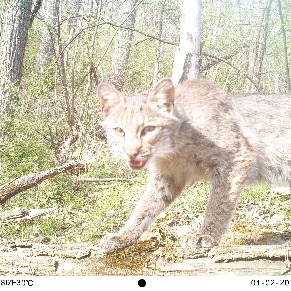
Our project is back with new data and a new research question. Help us find the bobcats that call our 10,000 acres of restored mineland home
FAQ
How do I classify wildlife?
Click on the "classify" tab at the top of the screen. That will take you to the classification page, on which there is a short tutorial that will guide you through how to classify images.
Pictures are overexposed/I'm getting a ton of "nothing here"
We are aware that a few of our cameras are taking some overexposed pictures. We are in the process of phasing out these cameras with newer ones that do not have this problem. These cameras also tend to take pictures when there is nothing in the frame due to sensitivity to sunlight or leaves moving. We have a special retirement count for pictures that receive a "Nothing here" or "Human" tag so they are retired faster. Don't give up classifying photos! Half the fun is searching through some photos before you get an awesome bobcat or squirrel shot!
I can't tell what something is, should I put "nothing here"?
Do NOT put nothing here unless you are absolutely sure there is nothing in the photo. If you see an animal and the image is too blurry, make it your best guess on what it is. If you feel like you can't tell what the animal is, use the "other small mammal" or "other large mammal" option. Don't worry about being wrong! The same image will be shown multiple times to other users for double checking.
I'm using "other small/large mammal" option a lot. Is that normal?
You really should try and identify the animal. Even if you are not 100% sure, put your best guess. Images are shown multiple times to different users. We always have the final look over, so we can always decide what it is among the classifications that we get.
Why isn't there an "I don't know" button? What if I really don't know what it is?
We don't have "I don't know" as an option because there needs to be a classification on every photo, even if that means putting "large mammal" or "nothing here." If you truly don't know what something is, use your best judgment. Remember, these photos are shown to multiple users. We will also look at individual photos if we find discrepancies in the classifications. Mistakes are bound to happen, and that's why we have a team of scientists to double check!
Why are there no species options for birds?
It would be difficult to list all the bird species possible in the list, especially since the camera array was designed to detect mammal species. Instead, it is easier to differentiate by size so that our biologists can review later for species identity. However, for our bird-savvy friends, we encourage you to post your identifications of the species using the "Talk" feature when you're done classifying the image.
When can I see some results of your study?
We hope to have some results for you to read about by December 2018, that is, if we get enough classifications to work with!