Finished! Looks like this project is out of data at the moment!
The Team
Our Team
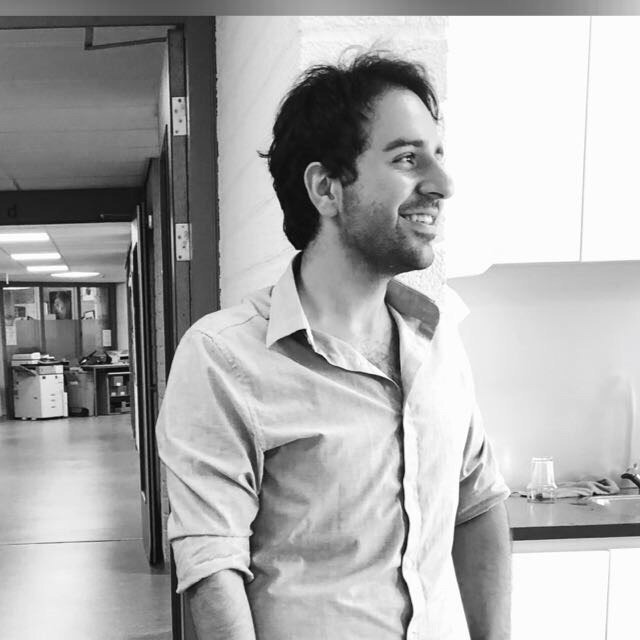
Anna Lanteri- project builder and manager. M. Sc. in Theoretical Statistical Physics at the Sapienza University of Rome. Thesis on deep learning Generative Models for cosmological data. Plays the ukulele and paints watercolors but should not quit her day job.
Reynier Peletier- principal investigator. Professor at the Kapteyn Institute at the University of Groningen. Studying the formation and evolution of galaxies, by studying their structure, kinematics and stellar populations. At the moment, mostly focusing on studying dwarf galaxies in the nearby Universe.
Aku Venhola - Post-doctoral researcher at University of Oulu, this project is based on his PhD thesis. You can see a list of his publications here:
Teymoor Saifollahi- Observational astronomer and PhD student at the Kapteyn Astronomical Institute, the Netherlands. His research focuses on low-mass galaxies as the proxy to understand dark matter. If he wasn't an astronomer, he could be a journalist or politician. Searches for aliens in his free time.
Nushkia Chamba- Post-doctoral fellow at Stockholm University, Sweden who uses deep imaging techniques to study galaxy formation and evolution in the low surface brightness Universe. She is also a scuba diver in training, looking for the best dive sites around the world.
What is Sundial?

SUNDIAL (SUrvey Network for Deep Imaging Analysis & Learning) is an ambitious interdisciplinary network of nine research groups in The Netherlands, Germany, Finland, France, the United Kingdom, Spain, Belgium and Italy. The aim of the network is to develop novel algorithms to study the very large databases coming from current-day telescopes to better understand galaxy formation and evolution, and to prepare for the huge missions of the next decade.
Thanks to this initiative, a number of young scientists are being trained in the fields of computer science and astronomy, focusing on techniques of automated learning from large quantities of data to answer fundamental questions on the evolution of properties of galaxies.
New in this network is the combination of two fields, with their own history and traditions. Combining fields is the only way to continue to make progress in this era of Big Data. We expect that several of the methods that we develop will have useful applications in other fields in science and society.
Our network also contains 5 private companies, who collaborate with the university and observatory groups to bridge the gap between the academic world and society, with the aim to convert our results into commercial products.
We are passionate about science outreach, and we want to explore ways to make science more accessible for as many people as possible. This zooniverse project is part of this effort.
This project has received financial support from the European Union's Horizon 2020 research and innovation program under the Marie Skłodowska-Curie grant agreement No. 721463 to the SUNDIAL ITN network.