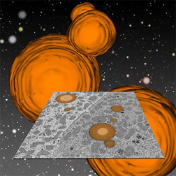
Finished! Looks like this project is out of data at the moment!
Thank you all for your participation in this project! We are excited to share some key results in the following Blog Post. Also, see our Results Page where we share an in-depth overview of our results!
The Team
Mayo Clinic

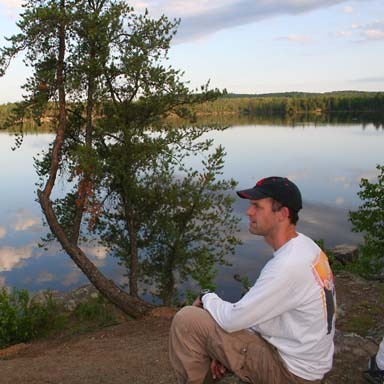
Jeffrey Salisbury
Scientific Director of the Microscopy and Cell Analysis Facility
Jeffrey is the Scientific Director of the Microscopy and Cell Analysis Facility at the Mayo Clinic in Rochester, MN. He engages with investigators, one-on-one, to develop imaging strategies to address their research questions. His research program has employed advanced optical, cutting edge 3D microscopy electron microscopy, comparative proteomics, reverse genetics, and molecular and cell biology methods to define the cellular and molecular mechanisms governing centrosome amplification and genomic instability in breast cancer.

Trace Christensen
Principal Developer in the Microscopy and Cell Analysis Facility
As a Research and Development Specialist in the Microscopy and Cell Analysis Facility at the Mayo Clinic, Trace consults with researchers to help apply advanced imaging techniques to their work. Lately he has focused on building a 3D electron microscopy service at Mayo to apply to a variety of biological research applications. What excites Trace the most about the Zooniverse is how it 'visualizes' scientific research - "a compelling image can convey such an important message!" Thanks to everybody for helping us create that compelling image...you are contributing significantly to research of lipid related disease!

Lindsay Nevalainen (she/her)
Research Technician in the Microscopy and Cell Analysis Facility
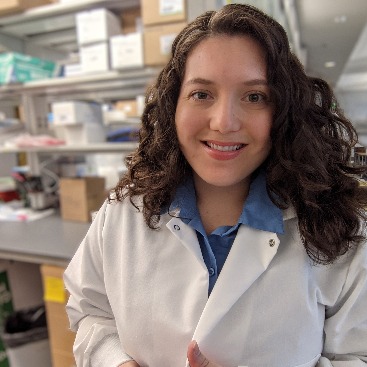
Lindsay recently completed her PhD in microbiology, focusing on host-microbe interactions. She strongly believes that science should be accessible to everyone, not just specialists, so when she was presented the opportunity to become involved in this citizen science project she gladly accepted. Dr. Nevalainen is excited to be working with the team and is looking forward to helping this project grow.
University of Minnesota

Doug Mashek
Professor, Department of Biochemistry, Molecular Biology and Biophysics at the University of Minnesota
The central research theme of the Mashek laboratory is on the role of lipid droplets in the development of metabolic and aging-related diseases. Our inFATuation with lipid droplets stems from the dynamic nature of the organelles and their ability to influence so many cellular functions beyond simply storing energy. We are so thankful for all the citizen scientists out there generating this useful data, which will greatly advance our understanding of lipid droplets and expedite our progress towards effective therapies for the many diseases characterized by lipid droplet dysfunction.

Thomas Pengo
Director of Applications and Services at the University of Minnesota Informatics Institute
Thomas Pengo is the Director of Applications and Services at the University of Minnesota Informatics Institute. His background is in image analysis and microscopy, and the favorite part of his job is to talk to researchers to see how he can bring computer vision methods to all branches of science (and humanities!). In his supervisory work he is lucky to work with a highly skilled team of scientists who are looking to do the same with genomics, metagenomics, proteomics, material science and neuroimaging. In this project he'll be helping the machines recognize lipid droplets and distinguish them from other neighboring organelles.

Lucy Fortson
Associate Professor in the School of Physics and Astronomy
Lucy Fortson is a Professor in the School of Physics & Astronomy at the University of Minnesota and a co-founder of the Zooniverse platform. At night, she’s a gamma-ray astrophysicist studying active galactic nuclei. Her day job is pushing our understanding of how to best combine human and machine intelligence on the Zooniverse platform - we can’t tackle the challenges of big data in any domain without both. One of her favorite things about working with the Zooniverse is the opportunity to learn about so many different areas of science - she’s excited to be part of this project because she gets to dust off all that high school biology she learned so many years ago so we can all contribute to an improved understanding of how lipids help keep our bodies together!

Mark Sanders
Program Director of the University Imaging Centers (UIC) at the University of Minnesota
My experiences as an invested, collaborative scientist drove me to become the Program Director of the University Imaging Centers (UIC) at the University of Minnesota. I have an enduring interest in advancing scientific research using a wide-range of the visual tools science and technology has to offer. My program is driven by the principle that imaging technologies offer a fundamental solution for probing the basis of biological events across multiple scales. Further, the most efficient way to answer modern research questions is through the educated use of both multi-modal imaging and molecular tools. A challenge that will be addressed here is how do we engage the broader community on integrating these techniques into the appropriate scientific outcomes. My education and technical background have shaped my efforts to identify research gaps that could be bridged through an appropriate application of cutting-edge microscopic techniques by optimizing sample preparation, imaging, and analysis. Thanks for helping on this exciting and important topic!
Baylor College of Medicine

Gloria Echeverria
Assistant Professor in the Dept. of Medicine, Lester and Sue Smith Breast Cancer Center, and Dan L. Duncan Cancer Center at Baylor College of Medicine
Dr. Echeverria trained in breast cancer research as a postdoctoral fellow at MD Anderson Cancer Center. She then opened her laboratory at BCM which studies tumor cell metabolism in an aggressive form of breast cancer, called ‘triple negative’ breast cancer (TNBC). Her laboratory focuses on how standard of care chemotherapies used in breast cancer clinics around the country affect tumor cells at the molecular and metabolic level. In this project she and her lab are eager to team with citizen scientists to understand changes in lipids in TNBC cells that are not killed by our most common treatments.

Mariah Berner
Doctoral student, Echeverria Lab
Mariah is a doctoral student at Baylor College of Medicine in the Cancer and Cell Biology Program. She is investigating the role of mitochondrial translation in triple negative breast cancer chemotherapy resistance. She has had fun learning how to make 3D mitochondria renderings, and is excited to be part of the Zooniverse Project!

Katie Pendleton
Doctoral student, Echeverria Lab
Katie is genetics doctoral student at Baylor College of Medicine studying mechanisms of chemoresistance in triple-negative breast cancer. She is investigating if heightened lipid metabolism post-chemotherapy contributes to enhanced resistance. She has a great appreciation for team-based science and is excited to contribute to the development of a resource that will be used globally by scientists.
The Francis Crick Institute, UK

Lucy Collinson
Head of Electron Microscopy
Lucy is Head of the Electron Microscopy Science Technology Platform (EM STP) at the Francis Crick Institute in London. She has a research background in microbiology and cell biology, and previously ran biological EM facilities at UCL and Cancer Research UK. The EM STP works with research groups at the Francis Crick Institute to address a range of biological questions that involve imaging a diverse range of samples, from molecules to whole organisms.
Martin Jones
Deputy Head of Microscopy Prototyping
Martin is Deputy Head of Microscopy Prototyping at the Francis Crick Institute in London. Originally an experimental physicist, with an interest in evolutionary and adaptive computation, he switched to biological research at Cancer Research UK’s London Research Institute. After initially working in a vascular biology lab, Martin joined the Electron Microscopy Science Technology Platform where he now works on developing new hardware and software solutions to help acquire and efficiently interpret image data.

Helen Spiers
Zooniverse Biomedical Research Lead
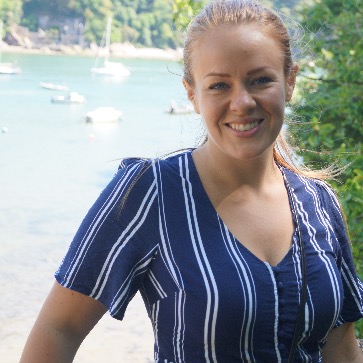
Dr Helen Spiers is the Biomedical Research Lead of the Zooniverse (www.zooniverse.org). Currently based across the University of Oxford and The Francis Crick Institute, where she is presently seconded, Dr Spiers collaborates with multiple national and international research groups to develop, deploy and novel biomedical citizen science projects. Although diverse in subject matter, these projects are united by the common aim of applying collective intelligence to perform distributed data analysis of large volumes of biomedical data. Additionally, Dr Spiers analyses the meta-data produced by the Zooniverse platform and applies citizen science to advance electron micrograph segmentation approaches. Prior to her current role, she completed a PhD in developmental epigenetics at King’s College London after obtaining a degree in Biochemistry from the University of Oxford.