


This project has been built using the Zooniverse Project Builder but is not yet an official Zooniverse project. Queries and issues relating to this project directed at the Zooniverse Team may not receive any response.
For each initial image: (1) Decide if the molecule presented is chiral (or at least has the potential to be). (2) Work through the questions presented about the potential chiral elements presented (if present). If you wish you may use the text keys to provide an assignment (R, S, P, M, +, -, etc.) for the stereochemical features you choose, but this is optional. (3) If the molecule is achiral (i.e. not chiral) you will be given the opportunity to tell us why. (4) You can either end at this point, take another example.
Zooniverse Talk
Chat with the research team and other volunteers!
Chiral Molecules Statistics
View more statsAll Time Stats
Active Stats
Active stats provide information about currently active workflows and subjects.
Message from the researcher
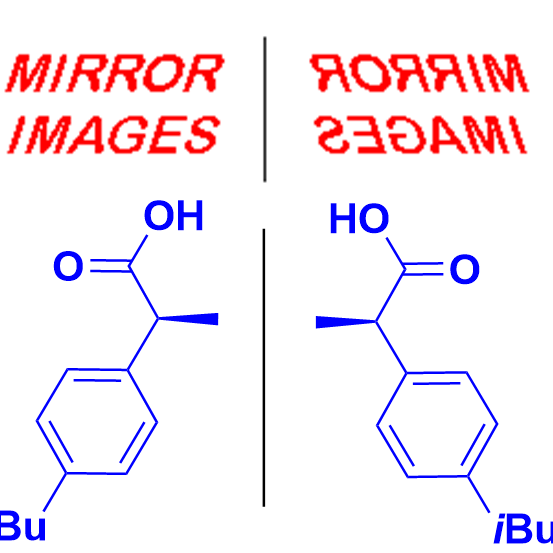
To grasp the essence of chirality, it is instructive to withdraw for a moment from the familiar three-dimensional world into a two-dimensional one, into a plane, and enquire what chirality means there. Vladimir Prelog (Nobel Prize, Chemistry, 1975)
Chiral MoleculesAbout Chiral Molecules
This project aims to collect organic molecules images in the form of their 2D line drawings (as in the structures in the background image to this page). We ask you to say if a given image could be that of a chiral molecule, and if it is, to identifying the chiral elements present in the drawing.
We are developing this database to allow efficient recognition of chiral molecules from historical image sources where chiral molecules have been used but inadequately defined.