


Results
Results so far...
Click here to see the 2024 End of Year Report for the Twiga Walinzi Initiative! Previous annual reports can be found at this link.
Since June 2017, people from all over the world have been heading on a virtual safari to northern Kenya to help study and conserve reticulated giraffe. Over 20,000 volunteers have logged onto WildwatchKenya.org (WWK) to help us classify images from motion activated trail cameras and we recently hit an incredible milestone! In just under 2 years all of you "Wildwatchers" classified over one million images.
These classifications are a vital step towards helping our research team understand the giraffe populations at our two study sites in northern Kenya.
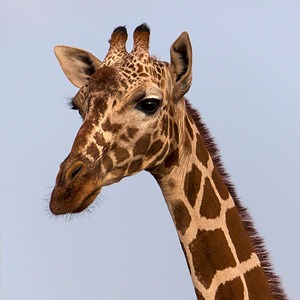
So far, over 4,000 images of giraffe have been classified with 175 of those images containing calves! These data, which help us identify the locations where giraffe are occurring, have already contributed to updating the range maps of reticulated giraffe. These new range maps, created by the giraffe research team at San Diego Zoo Wildlife Alliance, along with several partners around the world, were published last summer.

While we have been able to collect an incredible number of giraffe images, the most numerous species classified in the images, with over 20,000 classifications, was "livestock" which consists of camels, goats, sheep, cattle, donkeys, and domestic dogs. As over 95% of reticulated giraffe habitat is estimated to occur outside of formally protected areas, this massive number of images highlights the increased importance of understanding how giraffe and other wildlife exist alongside livestock in this shared landscape. We can use these data to try to understand areas of high giraffe density compared to areas of high livestock density.


This data will help us understand the displacement, if any, of giraffe by livestock and further inform giraffe conservation decisions.
We are also using this data to help increase community awareness and understanding of conservation. The Twiga Walinzi, the Kenyan-based research team, show the images and results from Wildwatch Kenya with community members. Although these communities live alongside wildlife everyday, many have never seen the rare and elusive animals that we are able to see through our trail camera images!
These classifications are not only providing crucial insight into these giraffe populations, but they have also contributed to research on other elusive or endangered species.
Amazingly, over 40 different species have been classified in these images, including servals, wildcats, wild dogs, leopards, and lions.
In addition to helping update the range maps of reticulated giraffe, these images also contributed to updating and ground-truthing the range maps for hyena. We have also been able to use the images of giraffe identified by WWK volunteers to help populate the Giraffe Spotter database (GiraffeSpotter.org) which helps keeps track and monitor individual giraffe across Africa utilizing novel coat recognition technology.
Recently, the first research from data classified on Wildwatch Kenya was published. While image classification accuracy by citizen scientists can vary across species, sometimes depending on how well known or unique a species is, the influence of other factors on accuracy is poorly understood. However, inaccuracy diminishes the value of citizen science derived data. Thus, it is needed to understand specific best‐practice protocols to decrease error of these classifications. We investigated how camera trap settings impact the accuracy of citizen science classifications. We compared the accuracy between three programs that use crowdsourced citizen scientists through the Zooniverse platform to process images online: Snapshot Serengeti, Wildwatch Kenya, and AmazonCam Tambopata. To significantly improve accuracy in crowdsourced projects, our results suggest that for medium to large animal surveys across all habitat types researchers should set trail cameras to take a burst of three consecutive photographs, set cameras in an area with a short field of view, and determine camera sensitivity settings based on in situ testing. We hope that this study can improve reliability of future citizen science projects, and subsequently encourage the increased use of such data.

To read the full article, follow this link: https://doi.org/10.1002/ece3.6722
A huge thank you to all of the amazing "Wildwatchers" that have tagged images, shared their favorite finds, and contributed to gathering this robust set of data! You have all played a vital role in conserving these remarkable animals.