Welcome! This project recently migrated onto Zooniverse’s new architecture. For details, see here.
Research
Understanding and Protecting One of Africa's Most-loved Animals
Giraffes are icons of Africa, found nowhere else on Earth. They are unique, magnificent, and much loved worldwide. They are also integral to their ecosystems, opening habitat for other wildlife and livestock and dispersing seeds for new plant growth. Yet when compared to other famous species, surprisingly we don’t know much about giraffes and how they live in their native habitat. For instance, we just learned that there ARE four different species of giraffe!
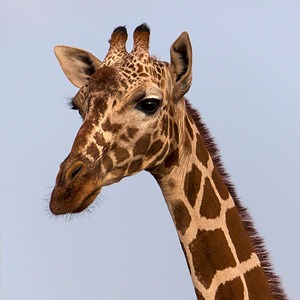
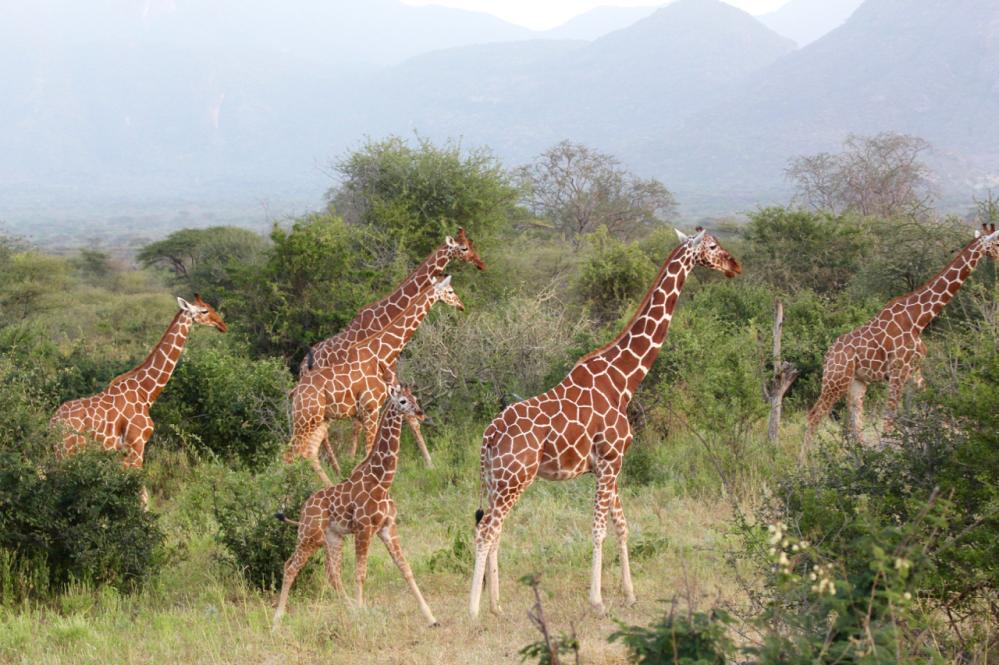
One thing we do know, unfortunately, is that giraffes are in trouble. Across Africa, all giraffe populations have experience staggering declines, leading the IUCN Red List in December 2016 to officially list giraffes as “Vulnerable” to extinction. Our project focuses on the reticulated giraffe (Giraffa reticulata), and current estimates show that the population of these giraffes has declined by over 50% in the past 30 years—from 36,000 to just around 15,000 today. The main drivers behind the decline appear to be habitat loss and fragmentation, land degradation, and poaching.
Saving the Towers of the Savanna
We want to help giraffes and reverse that negative trend. In 2016, we launched a collaborative conservation initiative to study reticulated giraffes, which historically ranged from northern Kenya into southern Somalia and Ethiopia. Initially, work was focused at two sites in northern Kenya: the 56,000-acre Loisaba Conservancy, and the 800,000-acre Namunyak Community Conservancy, however we now work in over 10 different locations! Across this network of conservancies, a team of community-led conservation researchers, the Twiga Walinzi (which means Giraffe Guards in Swahili), is conducting the field research to study these giraffes. They also monitor and keep records on individual animals, engage communities, and remove poaching snares from areas of habitat.
Picture It
Part of the research includes a network of 100 motion-activated trail cameras, which automatically take photos of animals as they pass by. Part of our job is to regularly check on these cameras to make sure they are still working, change the batteries, and replace the memory cards that store thousands of images. Sometimes we have to replace cameras that have been destroyed by weather, or even hyenas! We take the memory cards to camp and check that the pictures were taken properly, then we upload them to Wildwatch Kenya for you to review. Studying these photos allows us to understand which giraffes are using different areas of the habitat throughout the year. We also track animals other than giraffes, to understand what species share the habitat—including livestock and humans.

Plus, we take photos that show side views of giraffes and run them through pattern-recognition software (GiraffeSpotter.org). This way, we can identify and track individual giraffes—each individual has a unique coat pattern, like human fingerprints. By tracking particular giraffes, we can better understand where they go, what they do there, and how long they stay, which directs our protection efforts. We are also experimenting doing the same for leopards, identifying individuals with their unique spot patterns.
We Need You!
For Wildwatch Kenya, we would love to have you join our team and help review these trail camera photos, to identify and count the animals in them. We have tens of thousands of photos to sort through, and only a few researchers—your assistance will make a huge difference in the success of this project! We will use the results to better understand giraffe ecology and to inform our conservation efforts on the ground, for giraffes and the other species that share their habitat.
We’re working in the core of the reticulated giraffe’s range, in order to gather data on giraffe ecology and interactions, the drivers of decline, and the effects of humans that also live in this habitat. We hope this project is the first step in providing a sustainable future for giraffes, providing information to land owners and managers to assist in decision-making, and building a sense of community ownership around the conservation of this iconic animal.
Thank you for joining our team to help save giraffes!
