


Finished! Looks like this project is out of data at the moment!
By tagging our data from the rhino enclosure at Knowsley Safari you can help our drones identify one of the biggest endangered mammals. More workflows and different animals coming soon!
Zooniverse Talk
Chat with the research team and other volunteers!
Astro-Ecology Statistics
View more statsAll Time Stats
Active Stats
Active stats provide information about currently active workflows and subjects.
Message from the researcher
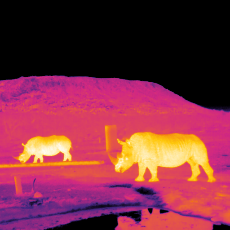
With a thermal camera animals glow like stars and galaxies, so we can use astronomical techniques to find them. But to tell different species apart we need to teach the computer what they look like first.
Astro-EcologyAbout Astro-Ecology
Animals are going extinct at a rate not seen since the disappearance of the dinosaurs. To help save endangered animals we need to monitor and understand ecosystems very well, and catch poachers before they do any harm. Drones allow us to survey large and difficult to reach areas quickly with minimal disturbance to wildlife. Using thermal cameras on drones means we can also survey at night when poaching activity is highest, and we can get around animals' natural camouflage and see through some types of vegetation.
In thermal data animals glow brightly because of their body heat - and because they are warmer than their surroundings they really stand out. This glow is the same type of glow that stars and galaxies have out in the Universe. This means that we can use methods from astronomy to find the animals and poachers and tell them apart automatically. We want to build a system using astronomical techniques which detects and identifies different animals as the drone is flying, so we can catch poachers and we can get the most accurate knowledge of ecosystem health to build the best conservation strategies. Astro-Ecology is a new research group at Liverpool John Moores University which has brought together ecologists, conservationists, astrophysicists and computer scientists to build this system. But now we need your help!