


Finished! Looks like this project is out of data at the moment!
Thank you, volunteers! We have successfully completed the Poets & Lovers transcription project. Please see Results for detailed information.
Help create the first complete edition of the co-written diaries (1888-1914) of "Michael Field, " two women poets and lovers who wrote and lived together until their deaths.
Learn moreJournal Entries
This workflow consists mainly of diary entries by Bradley and Cooper. Vol. 1 (1868-69) was written by Bradley while a young student in France. Vol. 5 (1892) and 10 (1896) are co-written. Subject sets are continuous pages.
Letters & Miscellany
Vol. 30 (1880-1912) was created by archivists at the British Library to contain loose-leaf materials from the other volumes. The sets treat each letter as a single document. Letters are grouped by author.
Zooniverse Talk
Chat with the research team and other volunteers!
Poets & Lovers Statistics
View more statsAll Time Stats
Active Stats
Active stats provide information about currently active workflows and subjects.
Message from the researcher
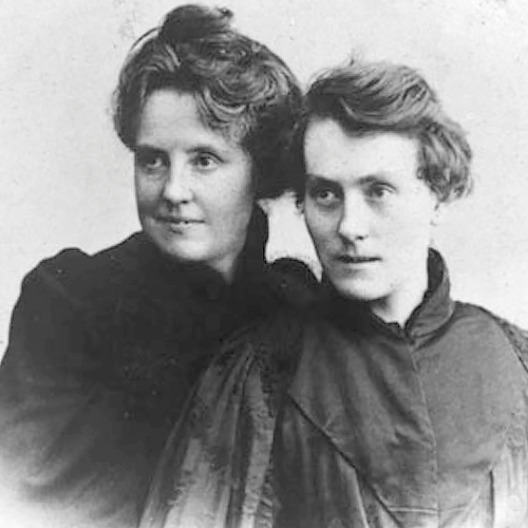
"Michael Field aspired to create beauty in all they wrote. Their diary is no exception: here Bradley and Cooper write their shared life as art, and their art as life, on pages of intimacy that they shared with the world."—Carolyn Dever, Dartmouth College
Poets & LoversAbout Poets & Lovers
The poets, dramatists, and diarists Katharine Bradley (1846-1914) and Edith Cooper (1862-1913) wrote collaboratively under the composite name "Michael Field." They were also lifelong lovers as well as aunt and niece, and considered themselves married. Their lyric poetry and historical verse-dramas are well known. Less known is the co-written diary that records their lives and literary endeavors from 1888 until their deaths. In addition to their own aesthetic response to events both contemporaneous and historically-resonant, it offers powerful historical documentation of the construction of a queer identity and chronicles the cultural life of fin-de-siècle London and Europe, detailing encounters with the leading literary and artistic figures of the period.