


Research
About Frog Find
Globally frog species are in decline. Over the last five decades in Australia, we have witnessed several frog species go extinct and another 37 listed as threatened or endangered. This decline is due to the intersection of multiple stressors, such as disease, habitat destruction, pollution, invasive predators and climate change. Unfortunately this decline is evident in both our built and natural environment.
Despite our National Park system being established to preserve the natural habitats of Australian species, many endangered frogs are becoming increasingly difficult to detect. Using historic sighting data, what we know about their breeding behaviours and habitat preferences, as well as help from the local community, we have surveyed several National Parks and their surrounding communities, searching for threatened species. While we would like to be everywhere at once, it is simply not possible. To combat this, we have deployed acoustic monitoring devices across numerous National Parks that records frog calling behaviours at night.
A single device can collects over 100 hours of acoustic data during its deployment and with over 50 devices currently deployed across our sites (with more to come), there are not enough hours in a day for us to get through them all. That is where you come in!
Help us identify the calling frogs so that we may better understand the distribution and habitats of our target species.
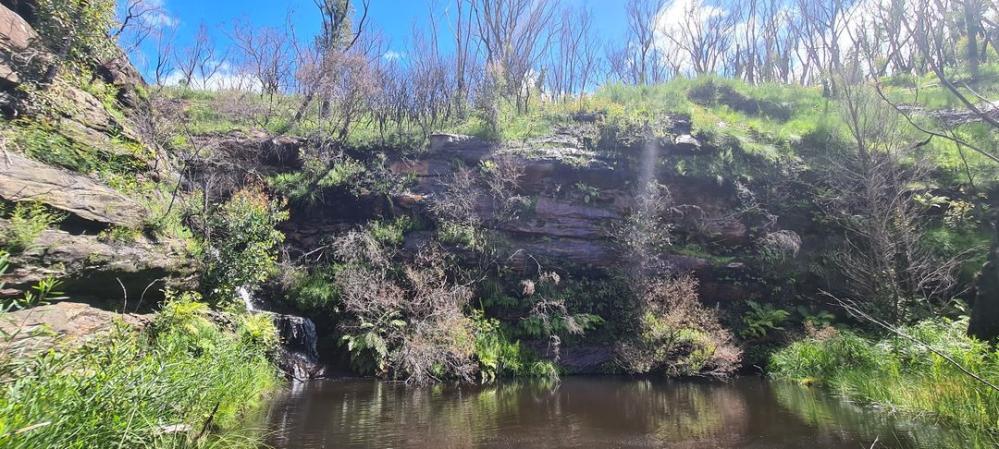
Sally Wattle Waterhole, Blue Mountains National Park. Source Oliver Kelly
About BIOMON
The Biosensor Monitoring project (BIOMON), is a collaborative effort between the University of Newcastle, SAPHI engineering, and several government and private environmental agencies with financial support from the NSW Environmental Trust. The BIOMON team is at the forefront of developing AI-powered call recognisers for field deployment. The teams focus is on monitoring the activities of various wildlife species, including frogs, birds, koalas and marsupials. Monitoring these species is crucial in the face of global biodiversity declines.
By deploying AI-powered monitors, the BIOMON team can gather vast amounts of acoustic data on species activity patterns and vocalisations in real time. This data is instrumental in shaping conservation efforts, as it provides insight into species phenology across multiple taxa. BIOMON's work represents a significant step toward leveraging AI for biodiversity conservation.
The BIOMON workflow
The BIOMON workflow aims to reduce data handling by developing a pipeline that continually trains the AI algorithm with new data.
Pre-deployment: The BIOMON device is trained on acoustic data previously collected through existing projects like Frog Find and from external sources such as BirdNet and XenoCanto.
Field deployment: BIOMON is then deployed in an area of ecological interest and begins listening and recognising a variety of species vocalisations. Once BIOMON makes an identification, it informs the BIOMON team in real time, records a 5 second snippet of the call and uploads it directly to the Frog Find Zooniverse project page.
Zooniverse: Our fantastic Frog Finders then verify that BIOMON has identified the correct species and submit their findings to the research team.
Continual AI training: The BIOMON research team then compares BIOMON's classifications to the verifications made by community scientists and feeds these results back into BIOMON as a means on continually improving the AI algorithm and machine learning capabilities.

Community Science
The Frog Find and BIOMON team survey all across New South Wales for frog breeding habitats. We have located potential breeding habitats in National Parks, State Forests, community gardens, private backyards and even along the highway. When we find a habitat that threatened frogs may inhabit we begin an acoustic monitoring program. Deploying acoustic monitoring devices allows us to gather hours and HOURS of frog calls that begin to form a picture of how the habitat is used and by which species. But getting through all that data is no easy feat.
By helping us classify calling frogs, you are helping us rediscover frog populations. Your efforts will be part of a long term monitoring program that will help us Find our Frogs!
