



Finished! Looks like this project is out of data at the moment!
Pop the Champagne, we just turned ONE! 🍾.
365 days, 4 360 Volunteers, 25 540 Videos of Flowers and 143 443 Classifications of Insects
Despite all of the chaos this year has brought, one thing remains certain. How grateful I am for all the citizen scientists who have helped make our work across Buzzy Bee – African Canopy Pollinators. Thank you for every like, follow, classification, question and feedback. Without the information gathered by volunteers, much of the work done to identify insect pollinators of large African timber trees simply would not be possible.
The willingness of participants to join together and work collaboratively has also led to the inclusion in this year's 'Into the Zooniverse' book’ highlighting 20 projects chosen from the more than 150 projects active on the Zooniverse platform in the 2020 – 21 academic year.
The link to the PDF version of the book, as well as details on how to order a hard copy, if of interest, are here: https://www.zooniverse.org/about/highlights
Welcome to Buzzy Bee - African Canopy Pollinators! Help us identify insect pollinators of large African timber trees!
Learn moreYou can click on MOVINGUI workflow to study pollination of Movingui’s delicate flowers. If you choose MOABI workflow, you will observe the flowers in dense fascicles of this sacred tree. By choosing AYOUS workflow, you will study pollination of one of the most harvested tree in Cameroon. You can click on AZOBE workflow to study pollination of this species' fragrant flowers. If you choose OKAN workflow, you will observe the foul-smelling flowers of this large tree. By choosing OMVONG workflow, you will study pollination of this species which timber is extremely hard.
Zooniverse Talk
Chat with the research team and other volunteers!
Buzzy Bee - African Canopy Pollinators Statistics
View more statsAll Time Stats
Active Stats
Active stats provide information about currently active workflows and subjects.
Message from the researcher
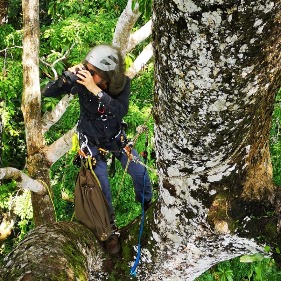
A lot is still unknown about pollination as this step is difficult to study owing to sampling constraints. With your help identifying potential pollinators, we can better understand the regeneration cycle of tropical timber species and therefore, their sustainable management.
obhasinAbout Buzzy Bee - African Canopy Pollinators
In order to define sustainable exploitation practices, it is necessary to understand regeneration cycles of timber tree species. The purpose of this research is to describe the relationship between pollen dispersal distances, floral traits, and pollinators of several timber species, as well as document the size and composition of pollinators communities. For this, we have been collecting ecological, genetic and behavioral data from different timber trees and their circulating entomofauna in three areas of tropical rainforest in Cameroon and Gabon.