


Welcome! This project recently migrated onto Zooniverse’s new architecture. For details, see here.
U kunt echt onderzoek uitvoeren door hier te klikken om te beginnen!
Forum
Praat met het onderzoeksteam en andere vrijwilligers.
SuperWASP Variable Stars statistieken
Bekijk meer statistiekenStatistieken aller tijden
Actieve statistieken
Elke klik telt. Word lid van de community van SuperWASP Variable Stars om dit project te voltooien en onderzoekers te helpen bij het behalen van belangrijke resultaten. Klik op 'Meer statistieken bekijken' voor nog meer statistieken.
Bericht van de onderzoeker

Stars are the building blocks of the baryonic Universe and determining stellar parameters is a cornerstone of astrophysics. Variable stars are key to this, as their time domain signal may be used to probe the dynamics or structure of a stellar system.
Andrew NortonOver SuperWASP Variable Stars
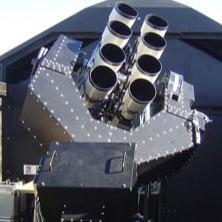
SuperWASP — the world's most successful ground-based survey for transiting exoplanets — used wide-field robotic telescopes to continuously image the night sky. Brightness measurements were obtained from ~105 stars per image, every few minutes, every night, and built up into lightcurves for each star. Over 10 years, SuperWASP generated >30 million lightcurves of bright stars across the entire sky (avoiding the Galactic plane where stars are too close together to be resolved). Each lightcurve contains ~20,000 data points.
As well as allowing searches for transiting exoplanets, SuperWASP lightcurves can reveal many variable stars. These include stars displaying pulsations or outbursts, as well as eclipsing binary stars or stars displaying rotational modulation. A period-search has identified >1.5 million possible periods in around 750,000 objects. The purpose of this project is to identify and classify the folded lightcurves of all objects with measured periods as either eclipsing binary stars, pulsating stars, rotationally modulated stars, or simply junk.

This project was developed with the help of the ASTERICS Horizon2020 project. ASTERICS is supported by the European Commission Framework Programme Horizon 2020 Research and Innovation action under grant agreement n.653477