


Finished! Looks like this project is out of data at the moment!
Thank you for your efforts! We've completed the classification stage for this project! To browse other active projects that still need your classifications, check out Notes from Nature.
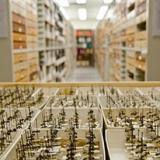
Insect museum specimens contain crucial data that can help us understand the impact of environmental changes on species and populations. The Triplehorn collection holds over 1M beetles. To accelerate digitization we joined with Notes from Nature and their community of volunteers.
Learn moreYou can do real research by clicking to get started here!
Zooniverse Talk
Chat with the research team and other volunteers!
Notes from Nature – An Inordinate Fondness for Beetles Statistics
View more statsAll Time Stats
Active Stats
Active stats provide information about currently active workflows and subjects.
Message from the researcher
Connect with the research team on Talk to learn more about this project!
About Notes from Nature – An Inordinate Fondness for Beetles
Together with the Notes from Nature community of volunteers, we are embarking on a quest to digitize label information for beetle specimens in natural history collections to better understand their distribution and ecological relationships.
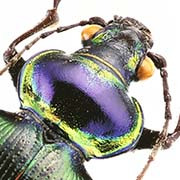
Beetles are one of the most diverse groups of animals on the planet. There are probably more species of beetles in the world than any other group of plants or animals and they can have direct impacts on humanity, negative and positive. Some species, such as the southern pine beetle, emerald ash borer, corn rootworms, and Japanese beetles, are severe pests of agriculture and forestry. Others are beneficial to society in their roles as predators of other insects (e.g., ladybugs), decomposers, food for other animals, and even as objects of beauty and veneration.
Our goal is to document the distribution of the thousands of species of beetles, both in time and in space, taking advantage of the data associated with millions of specimens in natural history collections. This information will enable us to monitor and anticipate expansions and contractions in geographic distributions, long-term changes in beetle diversity, and the appearance of invasive species.