Finished! Looks like this project is out of data at the moment!
Thank you for your efforts! We've completed the classification stage for this project! To browse other active projects that still need your classifications, check out zooniverse.org/projects.
The Team
The Cricket Wing Team
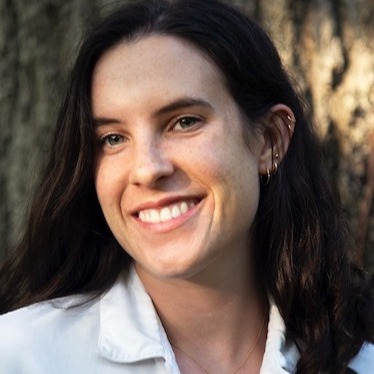
 | Gabrielle Welsh: Gabrielle spent four years of her undergrad watching stalk-eyed flies have sex and measuring their mating rates. After dancing in NYC for a few years, she realized she couldn’t escape insects and their mating behaviors for too long. She worked for a year studying the brain chemicals that impact the mating rates of stalk-eyed flies. Now, she doing a PhD studying mating behaviors in a rapidly evolving cricket system along with the immune and reproductive impacts of noise on these same crickets. |
 | Sophia Anner: Sophia spent four years studying the ins and outs of crickets, from exploring how the age of a cricket's mom impacts the son's sperm, to watching courting males do their best to sing a sexy song, to playing nonstop traffic noise and seeing how they fare. Now she's starting her PhD at the University of Louisville and studying sexual selection in Rhagoletis flies, but just can't part with the crickets. Self-described insect sex enthusiast and lover of emails. |
 | Dr. Mary Westwood: Formally trained evolutionary ecologist and informally trained gin connoisseur, Mary spends arguably too much time thinking about parasites, biological timing, and the sex lives of insects. |
 | Dr. Robin Tinghitella: Dr Tinghitella leads a team of researchers at the University of Denver who focus on the evolution and behavioural ecology of this cricket-fly system. |
 | Professor Sarah Reece: Professor Reece leads a team of "Reecearchers" at the University of Edinburgh who focus on the evolution and ecology of parasites. |
 | Dr. Aidan O'Donnell: Aidan is a postdoctoral researcher and lab manager for the Reece Lab. He keeps the Reece Lab cricket colony running, pilots experimental data collection methods, and facilitates experiments. |
Collaborators
 | Professor Marlene Zuk: Professor Zuk and her team have worked with this cricket-fly system for over 30 years and were the first to discover the presence of "flatwing" male crickets in the Hawaiian Islands. |
 | Dr. Nathan Bailey: Dr. Bailey’s group uses the cricket-fly system as a testing ground to understand the genetics and behaviour of rapid, recurrent adaptive evolution. |
Funding
 | Morris Animal Foundation: Funding for the human-generated noise project is provided by a grant from the Morris Animal Foundation, an organization that bridges science and resources to advance the health of animals. This grant supports our research to see how traffic noise impacts cricket immunity and reproductive investment. Check out this article for more info on Morris Animal Foundation and how our project promotes their mission! |
 | The Royal Society: Funding for the cricket song project has been generously provided by the Royal Society. The Royal Society is the world's oldest scientific academy in continuous existence, with the goal of recognising, promoting, and supporting excellence in science. |
 | The Wellcome Trust: Funding for the cricket song project has been generously provided by the Wellcome Trust. The Wellcome Trust is a global charitable foundation that promotes research towards the improvement of human and animal health. |