


Please take a moment to fill out this background survey before getting started with the transcriptions. Thank you so much for your help!
Research
What do babies say?
Please fill out the linked survey before beginning the Zooniverse workflows (starting with the Training Module). Please note that the survey has received the approval of the IRB. Thank you so much for your help!
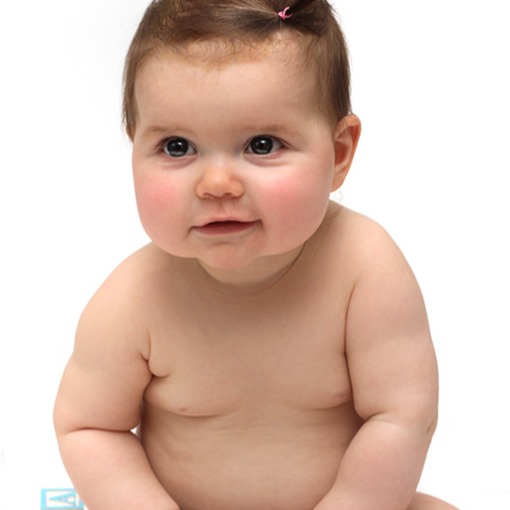
Did you know that, well before saying real words, children produce very different sounds with their mouths? Already at birth, they cry and we all know those sounds! A little later, they also begin to babble - that is, produce sounds closer to those of adult speech, because they have nice and clear consonants (like "t" and "p") and vowels (like "a" and "i").
We know that these speech-like sounds become more prevalent as babies grow older, but not a lot more. For instance, we don't know whether this happens at similar rates regardless of the language the baby is learning, nor when they begin to match adults in terms of how frequently they make them. We are also interested in seeing whether sounds babies make are different in infants that go on to have a medical diagnosis, such as Autism.
Today, most of the babbling data for babies comes from the United States and from typically-developing babies. With your help, we will be able to generate data for many more languages, cultures, and populations. Here is a world map with some of the locations in which our data were gathered:

Our data are really special because the child him/herself wears a recorder all day long. Then we analyze these 10-16h long recordings with software to try to find when the child or someone else is making sounds with their mouth. We cut our clips really short to protect the identity and privacy of the participating families.
Also, we find where there may be vocal sounds using a piece of software. When the software is wrong, you may hear an animal or just noise. By tagging that these are errors, you are also helping us improve our automated software.
As volunteers like you label these clips, we can look at what proportion of the clips contain speech sounds rather than purely emotional sounds (crying and laughing). And we can also look at what proportion of those speech sounds are "complex" -- in speakers of different ages. We are looking forward to answering these questions:
- Is the ratio of more versus less complex speech sounds the same regardless of which language the baby is learning? Or are there differences between children learning English versus, for instance, a Pidgin language that has only 10 consonants, or a Khoisan language that has 100 consonants? More generally, how does vocalization development proceed across cultures/languages?
- Do these changes happen at the same rate in children at risk of language impairment?
- When do children match adults in the frequency with which they make complex sounds?
- Are some of our recorders and/or software better than others?
For further questions, please refer to the "Talk" section of the project (which we will do our best to respond to within 24 hours) or to Dr. Alejandrina Cristia.