Welcome! This project recently migrated onto Zooniverse’s new architecture. For details, see here.
The Team
CURRENT SCIENCE TEAM
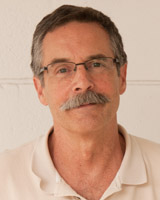
Bob Cowen is Professor and Director of the Hatfield Marine Science Center at Oregon State University. His research interests are focused on larval fish and the plankton communities upon which they depend. To better understand life on the time and space scales relevant to these organisms, he seeks novel ways to study the plankton realm. The development of the ISIIS imaging system is not only providing unprecedented insight into life in the plankton, but allows Bob to spend untethered days away from his desk on the high seas, ‘eaves-viewing’ on the secret lives of plankters.
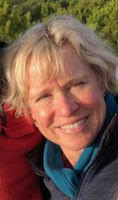
Su Sponaugle is a Professor at Oregon State University. A marine ecologist and fisheries oceanographer by trade, she conducts basic and applied research on the ecology of marine fishes and the dynamics of their early life history stages. She is especially interested in the processes underlying the growth, survival, and dispersal of early life stages, leading to successful settlement and recruitment to the benthic populations. The overarching goal of Su’s work is to better understand the events occurring in the pelagic larval stage that influence population replenishment and connectivity.
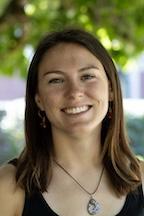
Elena Conser is a PhD Candidate at Oregon State University. She is using data from ISIIS imagery to understand how low oxygen ("hypoxia") directly and indirectly influences zooplankton distributions and interactions, with a particular focus on larval fish.
PAST CONTRIBUTORS
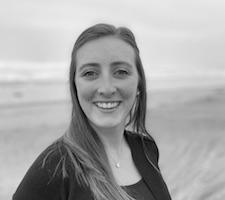
Kelsey Swieca completed her PhD at Oregon State University. She used our first set of ISIIS images in the northern California Current to answer a few questions about larval fish interactions with prey, predators, and competitors. Her doctoral work aimed to understand how different oceanographic conditions impact zooplankton spatial distributions and thus larval fish interactions in the highly productive and oceanographically complex northern California Current.
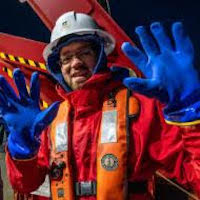
Moritz Schmid is a Research Associate at Oregon State University. After working in the Canadian Arctic and receiving a PhD in oceanography from Université Laval, Moritz joined OSU to continue working on the underwater imaging of plankton. Moritz leads the processing of underwater imagery from the ISIIS, using a state-of-the-art deep learning pipeline. He uses the resulting high-resolution in-situ data to study the responses of zoo-, and ichthyoplankton to their biophysical environment. Moritz is driven by the scientific opportunities that open up with the development of cutting-edge oceanographic technologies.
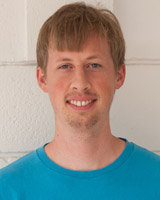
Adam Greer received his Ph.D from the University of Miami in 2013 and is currently a postdoctoral researcher at the University of Southern Mississippi Stennis Space Center. He is interested in the application of new sampling technologies, particularly imaging systems, to study fine-scale physical and biological processes that are important for larval fish feeding and survival. The ultimate goal of this kind of research is to determine the primary factors that influence fish population variability, enhancing our understanding of marine ecosystems. Adam also enjoys sports and living on the West Coast (of Mississippi).
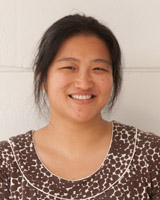
Jessica Luo is a Ph.D candidate at the University of Miami, using imaging systems to study the ecology of gelatinous zooplankton, larval fish, and other plankton in the ocean. She is interested in processes that structure marine communities, both biological (vertical migrations), and physical (fronts and eddies). She is also doing research on the contribution of certain plankton groups to the global marine carbon cycle. Previously, she was in Northern California, working in marine education and outreach for the National Park Service after receiving her B.A. and M.S. in 2007 from Stanford University. In her spare time, Jessica enjoys running and thinking about data science and crowd-sourcing.
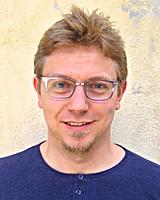
Jean-Olivier Irisson is an Associate Professor at the Observatoire Océanologique de Villefranche of the Université Pierre et Marie Curie. He is interested in plankton ecology, in particular in the distribution, behaviour and dispersal of fish larvae. In Villefranche he contributes to a research group focused on using imaging devices to study plankton. He uses modelling, experiments, in situ observation and a lot of statistics around all that to gain insight into the lives of the rare and fragile fish larvae. Together with Bob Cowen, he coordinated the cruise which collected the Mediterranean dataset.
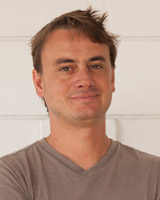
Cedric Guigand Is a Senior Research Associate working on the ISIIS instrument from the design and deployment to data analysis. Even though his background is in fish biology, he has interests in new technologies and engineering. His main contribution to the research done in this laboratory is problem solving and design of new field sampling and lab experimental systems ranging from hybrid multiple net systems to underwater video such as ISIIS.