
Finished! Looks like this project is out of data at the moment!
Thanks for all the help! This batch is finished. Check back later in November for a new batch.
Also, this project recently migrated onto Zooniverse’s new architecture. For details, see here.
Research
Science for Bumble Bees is a project of PolliNation DC, a collaborative community science project from the Smithsonian's National Museum of Natural History and the USGS Native Bee Inventory and Monitoring Lab with support from Howard Hughes Medical Institute.


What we want to find out
Our primary scientific question is: What native plants are most visited by bumble bees for pollen, nectar, or both?
You may be thinking, hasn't this already been done? The answer is mostly no. Determining which plants a species uses, which has been done, is not the same as noting which of those plants are visited most frequently and are at the top of a bumble bee's wish list.
Then you are right to ask, don't different species of bumble bees have different preferences? The answer is sort of yes. And it would be(e) great to know that, too. Of course we'd like to identify each bumble bee in these images to the species level, but that requires a level of expertise, and more targeted photos than time lapse provides. Knowing from other studies that there is overlap in the diets of bumble bee species sharing the same floral resources, we can find out what native plants are being visited most often by bumble bees as a group. When planting a garden, it's important to support as many species of bumble bees as we can, and we hope the results of this study will provide guidance on more informed choices of what to plant.
Why bumble bees?
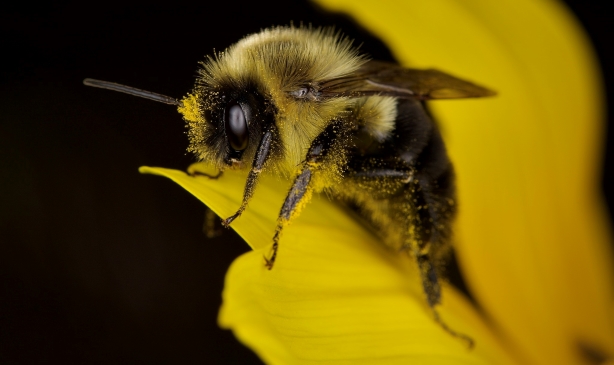
Bumble bees play an important role as pollinators for wild plants and agriculture. Their buzz pollination technique efficiently pollinates flowers, and having them in a vegetable garden can increase yield for food crops such as tomatoes, eggplants, berries, and squashes. Our gardens and Earth’s ecosystems depend on them. Yet many of the 46 bumble bee species in the United States are declining. And some are perilously close to their final act, extinction. Bumble bees need our help and it is time to act. The good news is almost anyone with a patch of outdoor space can plant native flowers for bumble bees and other pollinators and provide the pollen and nectar that they need for themselves and their colonies and offspring.
How we're doing it
This is where you come in! We've already taken time-lapse photographs of bees visiting flowers in the Washington, D.C. metropolitan area. We identified the flowering plants, and need your help to identify the bees on those flowers as either carpenter bees, honey bees, bumble bees, or something else. With your classifications, we can uncover the patterns and determine which native plants are most important to bumble bees.
Having people like you identify these bees means that we can collect and analyze far more data than we ever could on our own. We also get to have multiple people classify each photograph, which ensures that each bee identification is accurate.
Why should you care?
As humans, we rely on plants for about 80 percent of our diet. As climate change continues, pollinators are more important than ever to maintain our food supply. But many pollinators, including some species of bumble bees, are on the decline. Knowing which native plants are the most beneficial resources for bumble bees is critical for supporting these essential pollinators. We need your help to determine which plants will best sustain them with pollen and nectar. Then anyone, even you, can plant a bumble bee's favorite flowering plants to help keep their populations strong. And then there are philosophical and moral arguments for the protection of other creatures, but you already know what those are, so we won't go there.
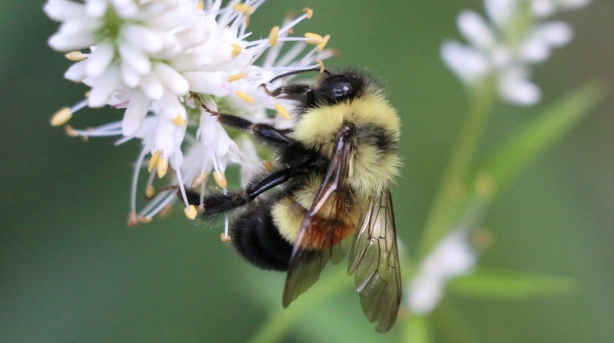
Image Credits
PolliNation DC Background Image by Diana Marques
Bee Covered in Pollen by rothkopf
Rusty-Patched Bumble Bee by illinois_joy
Bumble Bee by nellcant23
Carpenter Bee and Hummingbird Moth Field Guide Thumbnail by mikeabel
Eastern Carpenter Bee images by zaccota and akilee
Common Eastern Bumble Bee image 1 and image 2 by rothkopf
Brown-Belted Bumble Bee images by nellcant23 and illinois_joy
American Bumble Bee images by salticidude and rmaum
Black-and-Gold Bumble Bee images by jessicaw and mannac
Two-Spotted Bumble Bee images by scadwell and jenniferf4
Half-Black Bumble Bee images by bee_bob and jenniferf4
Lemon Cuckoo Bumble Bee images by nbdragonflyguy and michael_oldham
Honey Bee images by rothkopf and floriankreppel
Longhorn Bee images by royaltyler and bob15noble
Clearwing Moth images by heronwatch and owenstrickland
Leafcutter, Mortar, and Resin Bee images by gwenlh and bbull
Resources
Smithsonian's Natural History Museum Pollinators and Plants
USGS Native