This project has been built using the Zooniverse Project Builder but is not yet an official Zooniverse project. Queries and issues relating to this project directed at the Zooniverse Team may not receive any response.
Help NASA Identify Hazardous Thunderstorms In Satellite Imagery
Learn moreFind hazardous thunderstorms by identifying overshooting cloud tops in satellite images so NASA can develop better ways to detect them. You will examine 2 satellite images of storms: one showing sunlight reflected by clouds in a visible wavelength, another showing color-enhanced cloud temperature in an infrared wavelength. The Field Guide on the right teaches you how to identify overshooting tops in these images. When you have outlined all overshooting tops in a scene, your analysis is complete!
Zooniverse Talk
Chat with the research team and other volunteers!
Hazardous Thunderstorm Identification Statistics
View more statsKeep track of the progress you and your fellow volunteers have made on this project.
Every click counts! Join Hazardous Thunderstorm Identification's community to complete this project and help researchers produce important results. Click "View more stats" to see even more stats.
By the numbers
Message from the researcher
Connect with the research team on Talk to learn more about this project!
About Hazardous Thunderstorm Identification
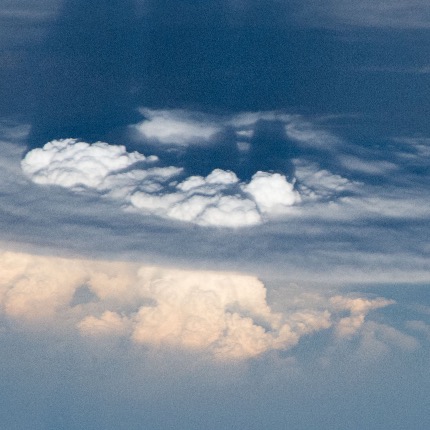
This project will allow you to help NASA scientists with their research on hazardous thunderstorms. NASA currently is working on several projects to better understand and detect thunderstorms that produce a variety of hazards such as tornadoes, large hail, damaging winds, lightning, aircraft icing, and flash flooding. Hazardous storms are regularly observed by satellites orbiting the Earth. One unique indicator of a hazardous storm in satellite imagery is an "overshooting cloud top" (referred to here as OT). OTs indicate the presence of rapidly rising air called an updraft. Strong updrafts are critical for generating hazardous weather conditions in thunderstorms.
NASA has recently developed computer software to identify these OT updrafts within satellite imagery. But no computer software can beat the human mind at OT identification! In order to determine the accuracy of the software and improve future versions, NASA needs your help to develop a large database of human-identified OTs.