



Thank you for your efforts! We've completed the classifications for this project! To browse other active projects that still need your classifications, check out zooniverse.org/projects.
Results
AI and computer vision are transforming how we study and manage urban forests. Thanks to the images classified by participants, we can now turn raw photographs into actionable insights. This provides cities with scalable, cost-effective, and data-rich tools for urban forest management.
By leveraging imagery and deep learning, we can:
✅ Automatically detect and classify urban trees
✅ Estimate structural attributes such as tree height, diameter at breast height (DBH), and canopy diameter
✅ Predict ecosystem services, including CO₂ sequestration, stormwater interception, energy savings, and air pollution removal
Example: How the model works on a real image
The model detects trees, estimates their structural attributes, and calculates the associated ecosystem services:

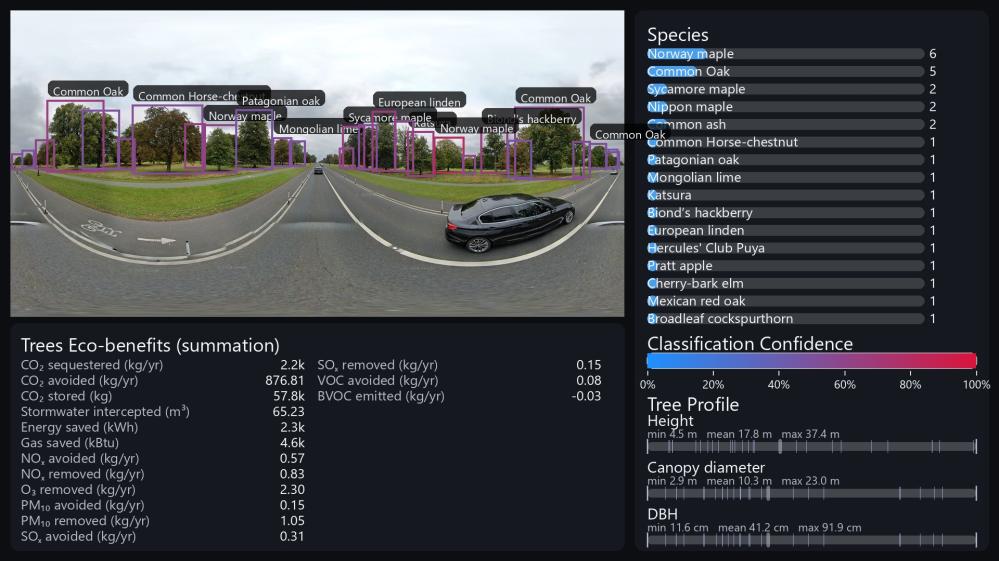
These examples of outputs from our AI model, showing tree detection, species classification, structural attributes, and predicted ecosystem benefits.
This approach enables us to create digital, data-rich tree inventories that help cities better understand, plan, and sustain their urban forests 🌍🌳