


This project has been built using the Zooniverse Project Builder but is not yet an official Zooniverse project. Queries and issues relating to this project directed at the Zooniverse Team may not receive any response.
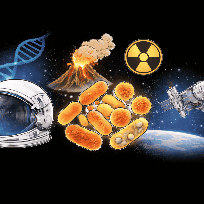
This project reviews scientific papers to group stress-response biomarkers in people and extremophiles living in space-like environments. Volunteers help sort biomarker data by organism, body system, and environmental stress. By comparing how humans handle multi-organ stress with how extremophiles survive at the cellular level, the project seeks shared and distinct resilience strategies. These insights may guide future work in space medicine and ways to protect against harsh conditions.
Learn moreThis project involves a systematic review of peer-reviewed scientific research on stress-response biomarkers in humans and terrestrial extremophiles. Relevant excerpts describing specific stress responses are extracted from published studies and organized into individual classification tasks. Volunteers then review these excerpts and categorize the information using structured labels, including organism type (e.g., human or extremophile), biological system (e.g., nervous or immune), stressor type (e.g., environmental challenge, such as radiation or temperature), and biomarker category (the specific biological indicator identified). Each excerpt is classified by multiple volunteers to ensure accuracy and consistency. The resulting classifications are compiled into a structured dataset (an organized collection of data) that compares stress-response mechanisms in humans and extremophiles under space-analog conditions (Earth-based environments that mimic space conditions). The goal is to organize existing knowledge into a coherent framework that can support future research in space medicine (medical practices for space environments) and adaptation to extreme environments.
Zooniverse Talk
Chat with the research team and other volunteers!
Classification of Stress-Response Biomarkers Across Humans and Extremophiles Under Space-Analog Conditions Statistics
View more statsAll Time Stats
Active Stats
Active stats provide information about currently active workflows and subjects.
Message from the researcher
"Such is life in science"
juliahexapentAbout Classification of Stress-Response Biomarkers Across Humans and Extremophiles Under Space-Analog Conditions
Extremophiles have persisted for millennia in environments previously considered uninhabitable, such as hydrothermal vents, extreme cold, high-radiation zones, and chemically toxic settings (Cavicchioli, 2002). In contrast, human evolution occurred under relatively stable Earth conditions shaped by gravity, atmospheric shielding, and moderate temperatures. While human physiology demonstrates complexity and adaptability, it lacks the cellular-level resilience characteristic of many extremophilic organisms. Extremophiles are found across all three domains of life: Bacteria, Archaea, and Eukarya (Cavicchioli, 2002). These organisms employ molecular strategies that enable them to survive radiation, oxidative stress, temperature extremes, and desiccation. Their survival mechanisms operate at the cellular and biochemical levels, utilizing enhanced DNA repair, protein stabilization, membrane adaptations, and antioxidant defenses (Cavicchioli, 2002). Research on extremophile habitats has broadened the scope of extraterrestrial environments considered potentially habitable and facilitated the identification of novel biomarkers relevant to astrobiology (Cavicchioli, 2002). As human activity extends beyond Earth, space environments present significant physiological challenges. Radiation, microgravity, and extreme temperatures are persistent obstacles to prolonged space exploration. This project aims to classify and compare stress response biomarkers in humans and extremophiles to elucidate differences and potential similarities in resilience strategies under space-analog conditions. By systematically organizing and analyzing stress response mechanisms, this project investigates how biological principles observed in extremophiles could inform the development of protective technologies, materials science innovations, and biomedical countermeasures for astronauts. The objective is not to propose direct biological modification, but to derive insights from natural survival systems and apply them to create safer, lighter, and more efficient protective strategies for space exploration. Life systems have historically expanded scientific insight and driven innovation (Cavicchioli, 2002). Understanding how extremophiles survive harsh conditions may help expand the edges of human exploration in a responsible, scientifically based manner.