Finished! Looks like this project is out of data at the moment!
Research
The Florida Wildlife Management Area System

The Florida Fish and Wildlife Conservation Commission oversees Florida’s Wildlife Management Area (WMA) system which includes public lands managed to protect fish and wildlife resources. WMAs conserve an extremely diverse array of habitats and wildlife, including significant parts of the Florida Wildlife Corridor.
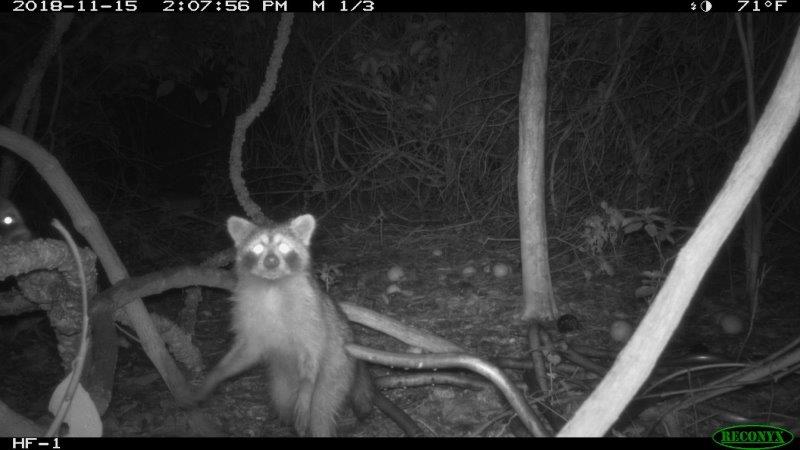
Florida Wildlife Watch documents wildlife on WMAs across the state with the goal of getting information about how FWC’s habitat management and restoration efforts benefit wildlife. To accomplish this, FWC staff and volunteers place and monitor cameras on WMAs throughout Florida, then participants like you analyze photographs from cameras to help identify what kinds of wildlife are present. The information gathered allows the FWC to make well-informed management decisions about Florida’s wildlife!
Other important goals of this project are:
• increasing the connections of people across the world with the Florida WMA system and Florida's wildlife
• facilitating volunteer/citizen science collaboration with the FWC
• furthering the science of trail camera monitoring and its integration with AI machine-learning to better understand wildlife populations, interactions, and behaviors.
You can see the results from this project on our interactive Data Dashboard!
Trail Cameras
Trail cameras (also known as game cameras, wildlife cameras or camera traps) are one of our preferred methods when documenting wildlife. Trail cameras can be more effective at detecting wildlife at a higher rate than other trapping methods. They are also less intrusive because they allow for multiple areas to be surveyed at the same time without needing to check those areas daily. Trail cameras are relatively cheap, and they require less work for staff than other trapping methods. Finally, they can be used for both short-term and long-term assessments of how many kinds of wildlife are in an area.
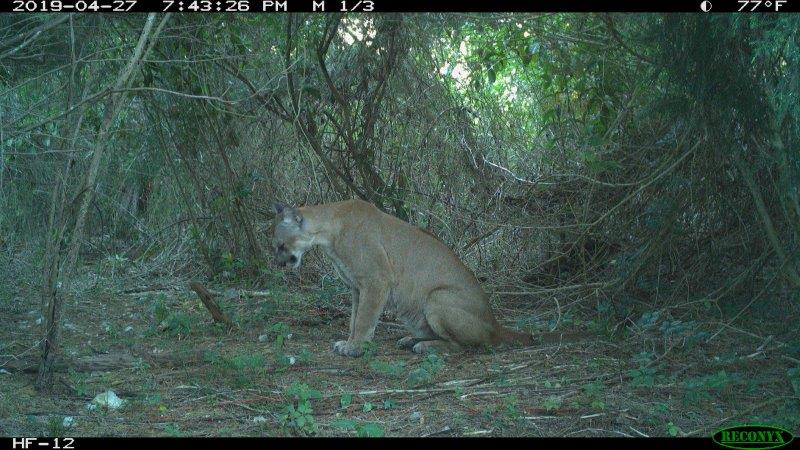
Like many other wildlife agencies and organizations, FWC has been using trail cameras for many years. Across the state there are a wide variety of projects that depend on trail cameras. Although the projects are diverse, the kind of work done on these projects is largely the same. Staff biologists and volunteers check cameras routinely to replace batteries and SD cards and to begin to process data. Each picture taken by the cameras gets thoroughly inspected, and all animals captured are identified to species level if possible. This can result in a tremendous amount of time invested by biologists. As a participant in this Zooniverse project, you can help the FWC by taking over a critical role in this process: the analysis! Through your help, we are able to analyze significantly more photos faster than we ever could on our own. This will give us more robust data and a better understanding of the wildlife using our Wildlife Management Areas!
We apply this trail camera approach to give us the best chance of detecting various species to provide documented species lists across the WMA system. This project can also potentially provide species persistence data and may provide rough information on species trends for the region. While this data should not be used to determine population sizes for these species at face value, it may provide population indices and also provide information on detectability of species. In the future, we hope to calculate captures based on habitat type and nights-until-first capture documentation, allowing staff to generate occupancy values from the data, dependent on a regimented methodology, staff availability, and data synthesis. These cameras can also provide us with important data to assess the overall health of terrestrial wildlife populations. Finally, we can use this data to evaluate overall wildlife use in ongoing habitat management projects. Thanks for helping us achieve these goals through your involvement in this project!