




Welcome to Galaxy Zoo : Rubin, our first look at early data from the Vera C. Rubin Observatory. Click the Rubin workflow in orange below to dive in.
Resultados
Public Classifications
All of the data which is currently publicly available from any phase of Galaxy Zoo is available on our Data Archive site.
Publications
The Zooniverse hosts a list of publications based on Galaxy Zoo data and written by the Galaxy Zoo team.
This is a list of over 650 publications mentioning "Galaxy Zoo" in the abstract from the NASA Astrophysical Data Service.
The Story So Far
Galaxy Zoo is now arguably the world’s best-known online citizen science project, and is certainly the one with the largest number of publications based on citizen scientists input. Our success inspired the creation of The Zooniverse, hosting project using the same technique across many research areas.
Galaxy Zoo 1
It all started back in July 2007, with a data set made up of a million galaxies imaged by the Sloan Digital Sky Survey, who still provide some of the images in the site today. With so many galaxies, we assumed it would take years for visitors to the site to work through them all, but within 24 hours of launch we were stunned to be receiving almost 70,000 classifications an hour. In the end, more than 50 million classifications were received by the project during its first year, contributed by more than 150,000 people.
That meant that many different participants saw each galaxy. This is deliberate; having multiple independent classifications of the same object is important, as it allows us to assess how reliable our results are. For example, for projects where we may only need a few thousand galaxies but want to be sure they're all spirals before using up valuable telescope time on them, there's no problem — we can just use those that 100% of classifiers agree are spiral. For other projects, we may need to look at the properties of hundreds of thousands of galaxies, and can use those that a majority say are spiral.
The task in that first Galaxy Zoo was slightly simpler than what you will find today; all we asked volunteers to do was to split the galaxies into ellipticals, mergers and spirals and — if the galaxy was spiral — to record the direction of the arms. But it was enough to show that the classifications Galaxy Zoo provides were as good as those from professional astronomers, and were of use to a large number of researchers. You can find out what people have been up to with Galaxy Zoo data in our list of papers published and on the Galaxy Zoo blog, as well as below. Apart from the publications, another tangible sign of success is the fact that we’ve been granted time on some of the largest telescopes in the world to follow up on many Galaxy Zoo discoveries: the list currently includes the Isaac Newton and William Herschel Telescopes on the island of La Palma in the Canaries, Gemini South in Chile, the WIYN telescope on Kitt Peak, Arizona, the IRAM radio telescope in the Sierra Nevada of Spain, The Very Large Array in New Mexico, Swift, GALEX, Chandra, XMM-Newton and Suzaku up in space, and perhaps most excitingly the Hubble Space Telescope.
Galaxy Zoo 2
The second phase of Galaxy Zoo, which ran from February 2009-April 2010 was inspired by our newfound confidence in the ability of you, our volunteer classifiers, and so we asked for a closer look at approximately 250,000 of the brightest of the Sloan galaxies. We asked about the number of spiral arms, the size of the galaxies' bulges and much else besides. Once again, we were thrilled with the response (and a little more prepared for it than we were for Zoo 1!) and in the 14 months the site was up we received a little more than 60 million classifications.
Along the way, we added more detailed images from an area of the survey known as 'Stripe 82', but it was soon time to look at the more distant Universe.
Galaxy Zoo: Hubble
The site’s third incarnation, Galaxy Zoo: Hubble drew from surveys conducted by the Hubble Space Telescope to view earlier epochs of galaxy formation. In these surveys, which involve many, many days of dedicated observing time, we can see light from galaxies, which has taken billions of years to reach us. The idea behind Galaxy Zoo: Hubble was to be able to compare galaxies then to galaxies now, giving us a clear understanding of what factors influence their growth, whether through mergers, active black holes or simply star formation.
Galaxy Zoo 4 and/or CANDELS (aka when we started to lose count)
The Galaxy Zoo site relaunched with an updated design in September 2014. The data being put into Galaxy Zoo could now be changed quickly more, thanks to the dedicated work of volunteers and the "retirement" of images that have already been completed. We started to lose count of how many phases of Galaxy Zoo had run, and instead focus on which images are being analysed.
In this version we combined new imaging from Sloan, giving us our best ever view of the local Universe, with the most distant images yet from Hubble's CANDELS survey. The CANDELS survey makes use of the new Wide Field Camera 3 — installed during the final shuttle mission to Hubble — to take ultra-deep images of the Universe. Our first surprise in this data was that contrary to predictions, galactic bars are still found in the most distant galaxies. Stay tuned to see what else we’ll discover!
Galaxy Zoo: UKIDSS
The relaunch site of the site in 2014 allowed us more flexibility to include smaller sets of galaxies, so we added images taken with the United Kingdom Infrared Telescope (UKIRT), in Hawaii, for the recently completed UKIDSS project. UKIDSS is the largest, deepest survey of the sky at infrared wavelengths. The UKIDSS infrared-light pictures and the SDSS visible-light pictures are different for two reasons. Firstly, older stars are brighter in infrared wavelengths (while in visible-light we see younger stars), and secondly, infrared light, like a fog light, can penetrate the dust and smoke in the centres of galaxies. Examining the UKIDSS images in Galaxy Zoo will enable us to see how old and young stars are arranged differently in the galaxies, and will reveal more of the structure in the inner parts of galaxies.
Galaxy Zoo: DESI/DECaLS
In 2015 we added the first images from the Dark Energy Camera Legacy Survey (DECaLS), a survey which uses DECam, one of the most sensitive and widest-area cameras ever built and a key tool in our search to measure and understand dark energy. DESI is the Dark Energy Spectroscopic Instrument, and the name of a subset of DECaLS. The DECam camera, which is mounted on the 4-m Blanco telescope at CTIO in Chile, images the sky at similar wavelengths to SDSS, but with better resolution and with the ability to detect much fainter galaxies. These images are extending the reach of the science we began with Galaxy Zoo 2 and SDSS. Because it uses a larger telescope, DECaLS is 10 times more sensitive to light than the survey that supplied images to the first iteration of Galaxy Zoo, the Sloan Digital Sky Survey. That means that we can see more detail.
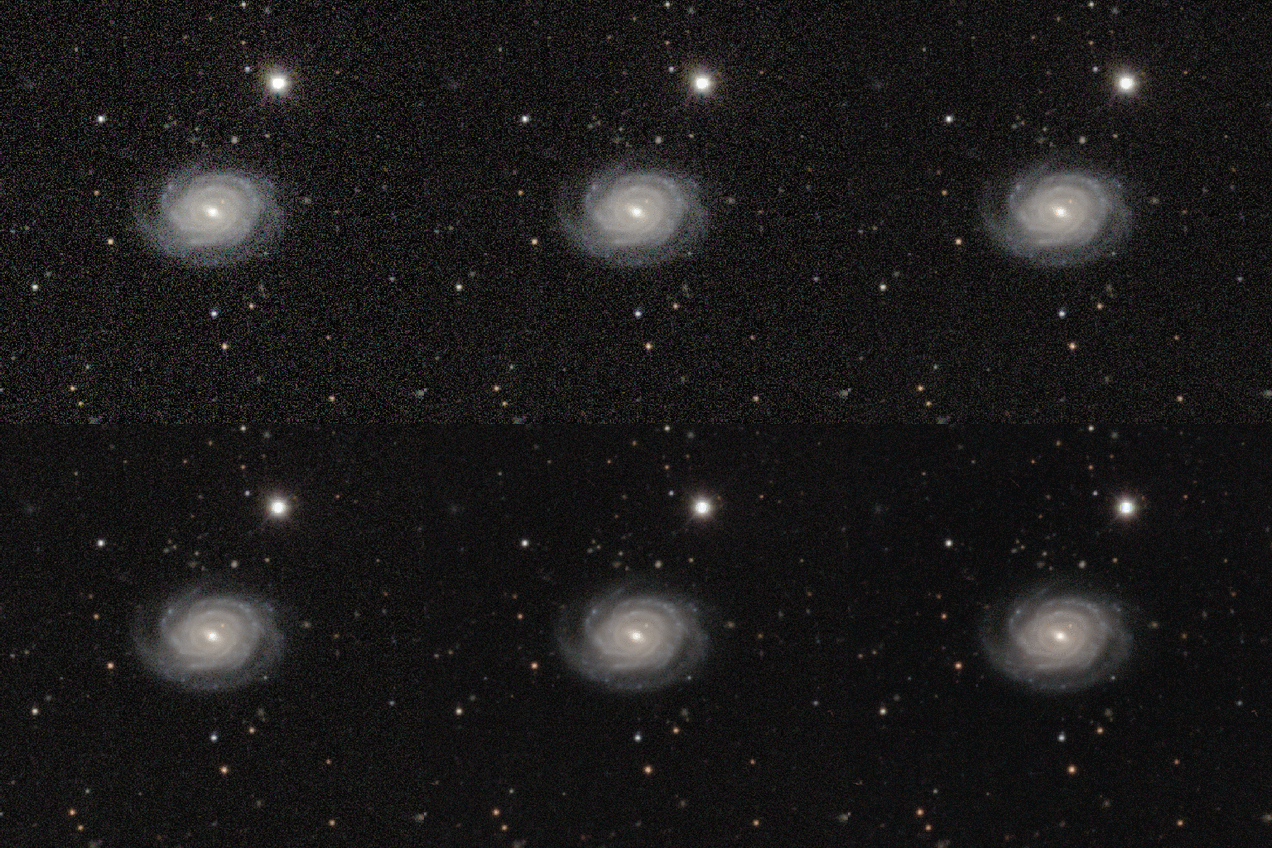
Starting in March 2016 the site began including a new set of DECaLS images, this time taken from the survey's second data release. This new data release covers a larger portion of the sky than the first. At this time we also included a set of "lost images" from SDSS that should have been included in the Galaxy Zoo 2 sample. These images fill in the hole that currently exists in the SDSS bright galaxy data set.
DECaLS is a huge survey, and continues to make data releases, so we may not be done with included these images on the site.
Galaxy Zoo: Illustris
In 2015, the site showed Galaxy Zoo's first-ever images of fully simulated galaxies; these were images that were created entirely on a computer, using sophisticated simulations of the Universe starting just after the Big Bang and then watching as dark matter, gas, and stars evolve to form the galaxies we see today. The classifications of these images, which came from the Illustris project, are a vital test of the physics that go into these simulations.
Galaxy Zoo: FERENGI
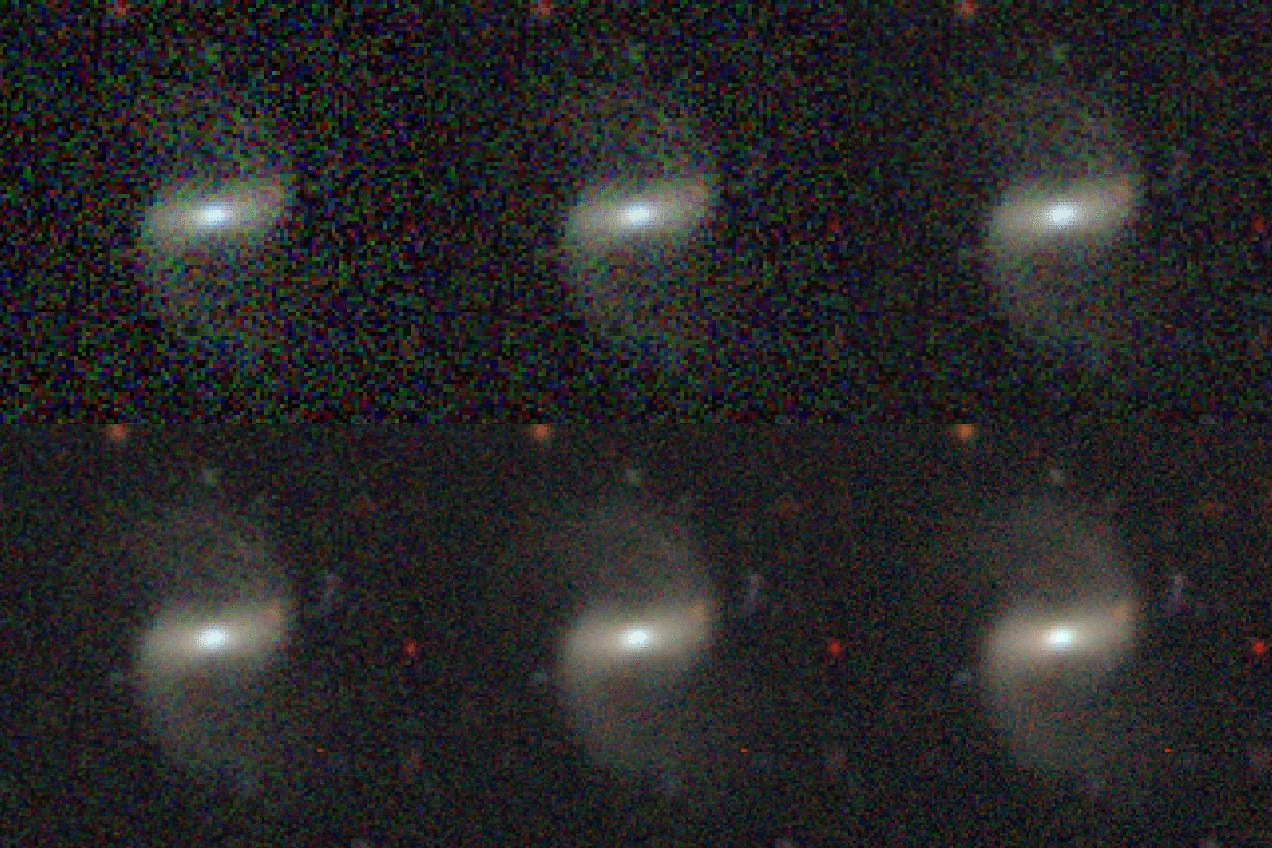
With increasing number of very distant galaxies entering Galaxy Zoo (like the Hubble and CANDELS sets), it was clear that the GZ team needed to find a way to measure and account for any dependence classifications might have on galaxy distance. So, in 2013 a set of 288 nearby SDSS galaxies were simulated using the FERENGI code to create images of these galaxies as viewed at varying distances and brightnesses. The classifications for these were used with great success in debiasing the Galaxy Zoo: Hubble catalog. To continue this effort, in 2016 a second, larger sample of 936 galaxies were simulated again with FERENGI to create 7,488 images of the same galaxies at eight viewing distances. The new FERENGI classifications will aid in the analysis of GZ Hubble data to be used in some exciting high-redshift science projects currently in prep!
Galaxy Zoo: GAMA
At the start of 2017 we added in images from another recent project that builds upon the legacy of SDSS, the Galaxy And Mass Assembly Survey (GAMA). Specifically, we have included optical images from the Kilo-Degree Survey (KiDS) over the region of sky covered by GAMA's comprehensive multiwavelength dataset. The Galaxy Zoo classifications of these galaxies will help us study how the properties of galaxies are affected by their neighbours and the surrounding large scale structure.
Galaxy Zoo: Cosmic Dawn.
Launched Oct 2022 These images came from the Hawaii Two-0 (H20) survey, part of the Cosmic Dawn survey that aims to understand how galaxies, black holes and dark matter co-evolve from the early Universe to the present. The Cosmic Dawn survey's ultra-deep imaging covers some of the darkest areas of the sky, allowing for the study of large numbers of galaxies going back to when the first of them formed within the first billion years after the Big Bang.
The galaxies here on Galaxy Zoo were imaged using the Hyper Suprime-Cam (HSC) camera on the 8.2 meter (27 feet) Subaru telescope on the summit of Mauna Kea in Hawaii. These galaxies are typically further away from us than those in previous incarnations of Galaxy Zoo, so their colours and resolution can appear a little different, generally appearing a little redder and blurrier.
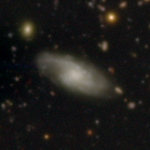
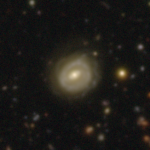
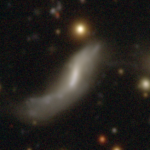
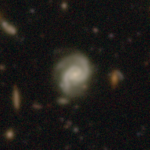
Galaxy Zoo: Cosmic Dawn is partly supported by the ESCAPE project, which aims to bring together the astronomy, astroparticle and particle physics communities to support open science, according to FAIR (Findable, Accessible, Interoperable and Reusable) principles. ESCAPE - The European Science Cluster of Astronomy & Particle Physics ESFRI Research Infrastructures has received funding from the European Union's Horizon 2020 research and innovation programme under the Grant Agreement no. 824064.

Galaxy Zoo Euclid
In Summer 2024 we were thrilled to announce the launch of the Galaxy Zoo: Euclid project!
The European Space Agency’s (ESA) Euclid space telescope launched in July 2023. Euclid has been designed to look at a much larger region of sky than the Hubble Space Telescope or the James Webb Space Telescope, meaning it can capture a wide range of different objects all in the same image – from faint to bright, from distant to nearby, from the most massive of galaxy clusters, to the smallest nearby stars. With Euclid, we will get both a very detailed and very wide view (more than one third of the sky) all at once.


Galaxy Zoo Euclid was the first chance for the public to see images from Euclid’s main survey. Euclid captures so many images (we have prepared 820,000 and counting, thanks to the ESA Datalabs digital platform) that almost every image will have never been seen before. We ran a special The Euclid Challenge which asked the following "Euclid scientists need your help. Euclid captures images of tens of millions of galaxies like those we’re showing here. To classify that impossibly-large pile of galaxies, we’re using your classifications to train AI algorithms (remember the Zoobot AI assistant?). But the AI algorithms need to be ready for the scientists by the end of August! We need as many volunteer classifications for teaching the AI algorithms as we can get; our goal is 100,000 classifications. We’re calling this The Euclid Challenge. Spread the word and dive in!"
And we made it! With your help, we were able to use your classifications to work on training AI algorithms. Galaxy Zoo Featured in the First Euclid Data release on 19th March 2024. We may periodically come back and ask for further refinement via more classifications, but in the meantime: well done!
Galaxy Zoo: CEERS
To prepare for Galaxy Zoo: JWST we ran a pilot with images from the Cosmic Evolution Early Research Science (CEERS) survey. We showed these images in two phases which ran May 2023-March 2024 and Mar - (27th) May 2025 (with a pause for a few days when the relaunch with COSMOSweb images happened).

CEERS used JWST to take extremely deep images of 100 sq. arcmin of the sky (which is about 1/8th the size of the Full Moon!). It is making use of JWST instruments called NIRCam, MIRI, and NIRSpec to obtain both images and spectra in this patch of sky. CEERS main goal is to demonstrate, test, and validate efficient extragalactic surveys with coordinated, overlapping parallel observations in a patch of sky which already has a lot of other multi-wavelength data (e.g. from HST).
Even though it was mainly a test survey for future projects, CEERS provided images which can help us find out a lot about the type and number of galaxies at very high redshifts (z~9-13), look for early star formation, black hole growth and the assembly of bulges and discs in galaxies at z>3 and look for dust observed star formation and black hole growth at z~1-3. We’ve already taken a look at your classifications from this pilot. With your help we found disk galaxies and galaxies with bars out to greater distances than ever before.
Related Projects
In addition to the main Galaxy Zoo task, the team has run an ever increasing array of side projects, leveraging the flexibility of the Zooniverse platform to ask for different, or more specifically targetted tasks related to analysing galaxy morphologies. You can visit many of these related projects in the Galaxy Zoo Organization landing page.
These side quests/projects have included:
- Galaxy Zoo: Mergers
- Galaxy Zoo: Bar Lengths
- Galaxy Zoo: 3D
- Galaxy Builder
- Galaxy Zoo: Clump Scout
- Galaxy Zoo Mobile
- Cosmic Disco: Characterizing Galaxy Collisions
Published Results
For access to the ever-growing list of team-led publications based on Galaxy Zoo data, please take a look at our publications page. This includes results from multiple phases of the project, including the original Galaxy Zoo, Galaxy Zoo 2, Galaxy Zoo: Hubble, Galaxy Zoo: CANDELS and more. Access to all of the Galaxy Zoo data products is available on our archive page, or through links in the published papers.