


Finished! Looks like this project is out of data at the moment!
Thank you all for your participation in this project! We are excited to share some key results in the following Blog Post. Also, see our Results Page where we share an in-depth overview of our results!
Help us identify fat droplets within cells in order to advance research of diabetes, heart disease, cancer and other chronic illnesses
Learn moreYou can do real research by clicking to get started here!
Zooniverse Talk
Chat with the research team and other volunteers!
Etch A Cell - Fat Checker Statistics
View more statsAll Time Stats
Active Stats
Active stats provide information about currently active workflows and subjects.
Message from the researcher
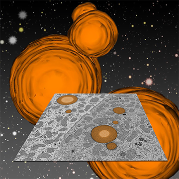
Decoding biological mechanisms in health and disease lies, in part, on understanding the relationship between structure and function. A better understanding of lipid droplets in cell structure will reveal clues linking abnormal metabolism to human disease processes.
Etch A Cell - Fat CheckerAbout Etch A Cell - Fat Checker
Why do we need fat? The balance between health and disease depends, in part, on the physical structure of the cells in your body and the activities that grow, repair, and power them. Lipids (also known as fats and oils) play a key role in life, serving as a main structural component of cell membranes, in cell signaling, and as a reservoir for energy storage and release. Without lipids, your body would disperse into a muddled fluid mass on the floor. Too much, too little, or the wrong kind or balance of lipids can lead to chronic diseases such as diabetes, heart disease, muscle weakness, neurodegeneration, and eventually to death. You get lipids by eating vegetables and meat, and your cells also make them.
The aim of this Zooniverse Citizen Scientist project is to help determine the number, size, and location of lipid droplets in cells, and to map their relationship to other parts of the cell that are important for processing and using lipids. To do this, we need you to help us by looking for, and drawing around, lipid droplets in images taken by a very powerful microscope.
The data you provide will be used to train an Artificial Intelligence program to recognize and render the 3-dimensional architecture of lipid droplets in cells.
This information will help biologists to understand the complex roles that lipids play in health and disease.