



Research
WELCOME TO SABLE ISLAND NATIONAL PARK RESERVE
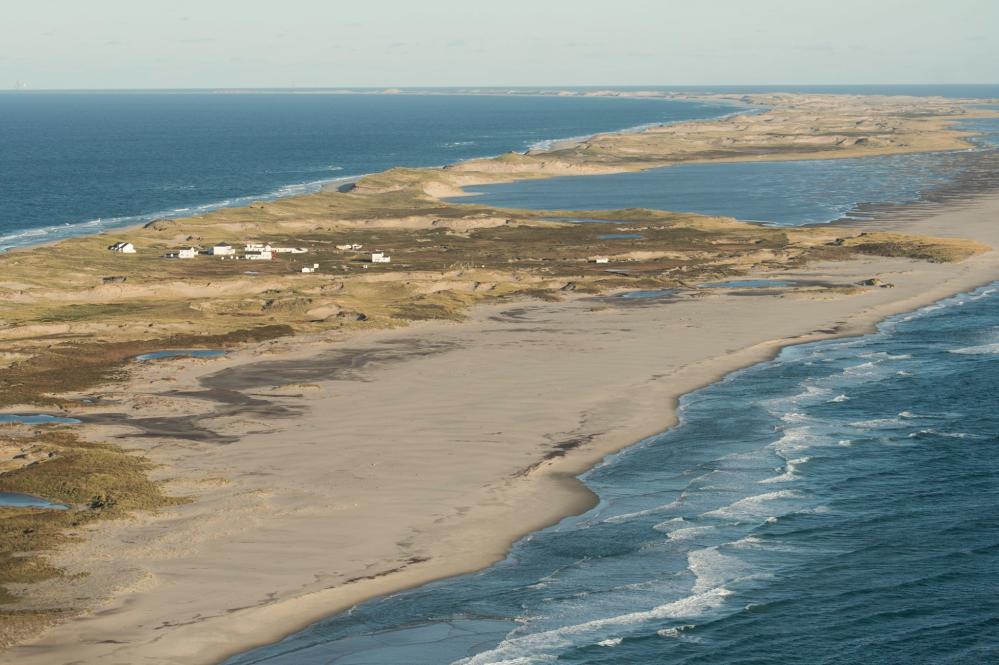
Photo credit: Debra Garside Photography
A wild and windswept island of sand sits far out in the North Atlantic, its iconic crescent shape emerging from the expanse of the sea. Isolated and remote, Sable Island is one of Canada’s furthest offshore islands. Shifting sand dunes, among Eastern Canada’s largest, dominate the landscape. The famous Sable Island wild horses roam freely, and the world’s biggest breeding colony of grey seals lives on its extensive beaches. Freshwater ponds hint at the life-sustaining freshwater lens floating below the island. Plants, birds, and insects have adapted to life on Sable, some of which are found nowhere else on earth.
Sable Island has a long and fascinating human history which spans more than four centuries. More than 350 vessels have been wrecked due to rough seas, fog, and submerged sandbars surrounding the island, earning it the title “Graveyard of the Atlantic”. Canada’s first life-saving station, established in 1801, was built here. Sable Island is a testament to survival in an unlikely environment.

Sable Island Shipwrecks Map Photo credit: Archives Canada
AN OVERVIEW OF THE GREY SEALS OF SABLE ISLAND
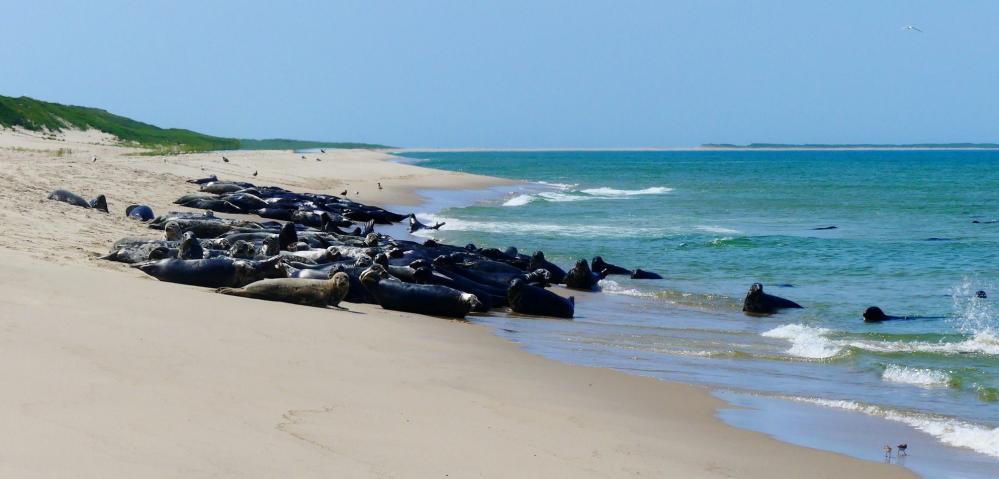
Sable Island is home to the world’s largest breeding colony of grey seals, which pup between December and early February. Roughly, 80 000 grey seals will have a pup on the island annually. The population has experienced significant growth in recent decades, but the rate of growth has slowed more recently. During the breeding season, grey seals occupy the beaches and both vegetated and non-vegetated inland habitats throughout the island. For the remainder of the year, grey seals generally haul out on the beaches in groups of dozens to thousands of individuals, with a particularly large number on the island during the annual moult in May and June.
There is also a small resident population of harbour seals which pup from mid-May to mid-June. This population has decreased in recent years, with shark predation and competition from grey seals suggested as reasons for the decline. Other visitors include ringed, harp and hooded seals; however, they do not breed on the island.

Fisheries and Oceans Canada (DFO) has had a long-term monitoring program at the breeding colony in Sable Island NPR, that provides estimates of pup production, age- and sex-specific survival and reproductive rates. These data have allowed DFO to monitor the growth of this population over the last 60 years.
Outside of the breeding season, grey seals forage throughout their range from Cape Cod to Labrador. The impact of these predators on the fish communities in the northwest Atlantic has been the focus of government researchers and academic collaborators. Using satellite tags attached to the seals, individual tracks showing the behavior of seals at sea are used to identify when and where seals are foraging. The tags deployed on grey seals on Sable Island show us that the seals hauled out on Sable Island forage primarily on the eastern Scotian Shelf, and spend about 20% of their time hauled out on Sable in the summer months.
WHY THIS PROJECT?
To better understand the foraging distribution and the ecological role of grey seals in the northwest Atlantic, it would be useful to know how many grey seals are using Sable Island as their main haul out site in the summer months.
In 2013, Sable Island became a National Park Reserve. Since that time, Parks Canada has been building a comprehensive geological monitoring program. This work includes high resolution aerial surveys of the island on a five year interval. These photographs also provide an opportunity for Parks Canada and DFO to collaborate. The count of seals on the island will be used to estimate the total number of seals using the area. This work will allow researchers to better quantify the impact of grey seals around Sable Island, eastern Scotian Shelf and beyond.
