


Research
Who We Are

Crystal Cove Critter Cams is a partnership between Crystal Cove Conservancy and Crystal Cove State Park.
Crystal Cove Conservancy is the nonprofit public benefit partner to Crystal Cove State Park, with the goal of cultivating our planet’s next generation of environmental leaders, ensuring that Crystal Cove, and places like it, live on for generations.
Our unique STEM (Science, Technology, Engineering, Mathematics) education programs engage students and the public in becoming good stewards of our environment by involving them in real-world community science research.
Where We Are

Crystal Cove State Park is located on the coast of Southern California between Newport Beach and Laguna Beach. The park contains 3.2 miles of coastline, and 2,400 acres of backcountry wilderness. Coastal habitats in Southern California have been heavily impacted by human use, and open spaces like Crystal Cove are often diminished and fragmented by urban development. Because we are cut off from most other large open spaces in Southern California, we want to know if Crystal Cove State Park is providing adequate space and suitable habitat to support a healthy population of larger mammal species such as coyotes, deer, and bobcats.
How We Study Mammal Populations

Mammals are tricky to study in the wild because it’s difficult to walk into the backcountry and simply look for them. Many of the larger species are shy of humans, and lots of the mammals in Crystal Cove State Park are nocturnal. This means that many of the species we want to monitor are only active after everyone has left the park. In order to monitor the mammals in the park, Crystal Cove Conservancy brings high school and middle school students to Crystal Cove’s Moro Canyon on field trips to set up motion-activated cameras.

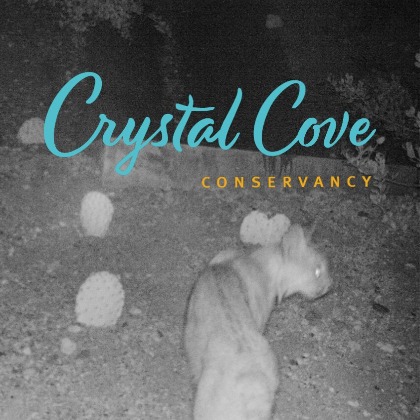
When the camera senses movement, it takes a photo so we can see what triggered that movement. We usually leave the trap cameras out in the field for 1-2 weeks at a time, then we collect the camera and download all the photos it has taken. This often gives us a massive number of photos, and a daunting task of identifying the animal that triggered each and every one.
We Need Your Help
And that's where you all come in! We need help to look through our catalog of trap camera photos from 2014-2020, and help us identify the mammal species present in each photo. Good luck, and thank you for your help!