


Research
What is this project all about?
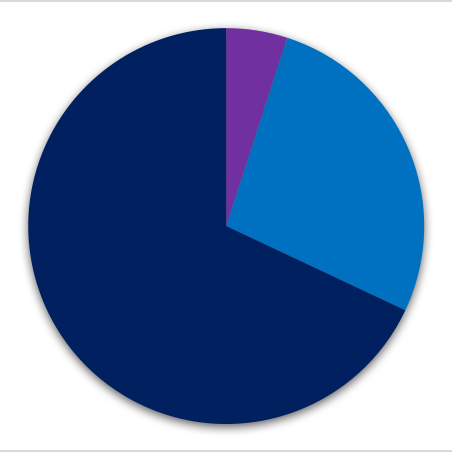
Dark Matter makes up 70% of the Universe but we can't see it and we have no idea what it is. One theory is that dark matter could be supermassive particles born in the early Universe. If this is the case then we may be able detect them indirectly.
Nothing lives forever and this is true of the particles that make up our Universe too. When supermassive particles age and decay they release photons which travel across the Universe. What happens to these photons on their way through the Universe will vary wildly. Some of them will interact with their surroundings and produce cascades of secondary particles far above the Earth's atmosphere which we call super-preshowers. Others might travel unaffected to the Earth and produce air showers when interacting within the atmosphere. Either way, the particles produced by such showers can be detected on the Earth by ground-based detectors and may allow us to identify the products of dark matter decay.
Why we need you - step one
To be able to distinguish super-preshowers from the other random particles that come to the Earth, we need to gather as many data as possible from detectors spread all over the world and look for patterns in that information. The QuarkNet, HiSPARC and Joint Institute for Nuclear Research professional networks have all been kind enough to share their data with the Dark Universe Welcome team at the CREDO collaboration.
However, one of the most valuable resources for this data collection phase is you and your smartphone. We need as many detectors as possible spread across as much of the world as possible to give the best chance of detecting what we're looking for. So, if you'd like to take part in this first step, simply download the CREDO Detector app onto your smart phone (Android only at this time, sorry).
Why we need you - step two
The next challenge is identifying the particles that may be coming from dark matter decay. There are lots of particles that come to the Earth from space and from the world around us. So only some of the images that come from professional networks, smartphones around the world and maybe even your phone are useful to this project. Again you are key to working out which particles we need.
Why we need you - step three
Finally, with the correct particles identified we can start to look for patterns in the data. It's very difficult for us to predict what the patterns made by super-preshowers will look like and how well hidden they will be amongst other particles. So, with your help, we hope to identify all of the patterns generate by these particles in both space and time as waves of super pre-showers come down to the Earth's surface at different, unpredictable, times and locations.
Eventually, we will be able to teach computers to better identify both the particles and patterns. But for now you are critical to teaching the computers and even when that job is don't there will still be some cases that computer just can't deal with and we know you'll be able to do it.
So lets move forward together looking for the existence of the supermassive particles which may compose 70% of our Universe.