


This project has been built using the Zooniverse Project Builder but is not yet an official Zooniverse project. Queries and issues relating to this project directed at the Zooniverse Team may not receive any response.
Decode data from Canada's first satellite images to help unlock Canada's space history
Learn moreYou can do real research by clicking to get started here!
Zooniverse Talk
Chat with the research team and other volunteers!
Agent Alouette Statistics
View more statsAll Time Stats
Active Stats
Active stats provide information about currently active workflows and subjects.
Message from the researcher
Connect with the research team on Talk to learn more about this project!
About Agent Alouette
Agent Alouette invites you to look through data from Alouette-I - Canada's first satellite. Help decode decades-old data by identifying numerical and binary dot codes, which represent dates, times, Station Numbers, and Station Names. Spot "hockey-shaped" data pattens representing the “echoes” or “reflections” of the signal by the ionosphere.
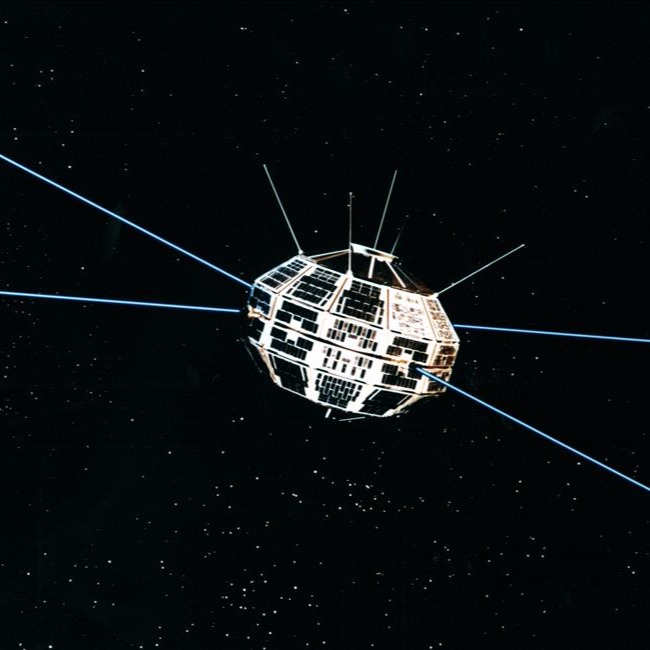
Launched on September 29, 1962, the Alouette-I scientific satellite marked Canada's entry into the space age and was seen by many as initiating the most progressive space program of that era.
With the Alouette launch, Canada became the first nation, after the Russian and American superpowers, to design and build its own artificial Earth satellite to monitor the ionosphere from above.
After three and a half years of design and construction, the 145-kg satellite was flown to California and launched from the Pacific Missile Range at 2:06 a.m. EST on Saturday, September 29, 1962. Sprung from a two-stage Thor-Agena rocket, Alouette-I was quickly put into a near perfect 1000 km orbit and soon began its top-down study of the ionosphere.
Alouette-I stretched its one-year design life into an unprecedented 10-year mission, producing over one million images of the ionosphere in the process. Agent Alouette invites you to decode data and classify ionosphere images to help unlock Canada's space history.
Following the success of Alouette-I, Canada and United States signed an agreement to launch further satellites under a new program called International Satellites for Ionospheric Studies (ISIS). Under the program, the Alouette back-up model was refurbished and flown in 1965 as "Alouette-II" and two new satellites, named ISIS I and ISIS II, were successfully launched in 1969 and 1970 respectively.
Go back in time and decipher the numeric and the Binary Digital Coding (BDC) used in 1963, and help manage the thousands of ionosphere images recently scanned by the Canadian Space Agency.