


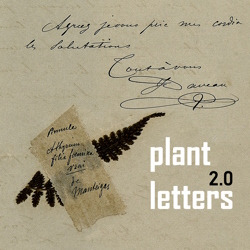
Coming Soon: NEW SETS OF LETTERS!
Help us find plant species, locations and people hidden in XIX century handwritten letters!
Learn morePlant Letters are grouped by language, so choose the language you feel most comfortable with . The tasks are the same within each group of letters.
Zooniverse Talk
Chat with the research team and other volunteers!
Plant Letters Statistics
View more statsAll Time Stats
Active Stats
Active stats provide information about currently active workflows and subjects.
Message from the researcher
Connect with the research team on Talk to learn more about this project!
About Plant Letters
In the XIX century, the University of Coimbra saw an enormous accumulation of biological specimens originating from Portugal but also from all over the world, especially the former portuguese African colonies, and which are now part of museum, herbaria and other natural history collections. Aside from the objects, the records of these botanical expeditions of plant collection and identification are held in thousands of handwritten letters, species lists and assorted notebooks, in more than five different languages.
We thus ask for your generosity and knowledge in helping us transcribe handwritten letters received by the Botanic Garden of the University of Coimbra from ca. 1870 and 1928, from more than 1100 correspondents from around the world!
By transcribing the information contained in these documents, you will allow us to: track plant specimens circulation; to determine historical plant locations in parts of sub-Saharan Africa; to better understand the scientific processes of plant discovery, taxonomy and botany, including the participation of local assistants and indigenous knowledge; to collect information that gives context to biological specimens and museum objects. This data, valuable to the present and future conservation of plant diversity, will be made freely available at the Plant Letters database, that we invite you to visit - cartasdanatureza.uc.pt/.