



Finished! Looks like this project is out of data at the moment!
FAQ
Frequently Asked Questions
I can't tell what species the bird is!
Give it your best guess as to what species you think it is! At minimum, we want to know the number of birds there. If some of the species identifications are wrong, that's okay. We'll work with the best data we can get.
How do I record the number of individuals for each species if they aren't all at the feeder at the same time?
To make sure that you don't report an individual more than once, only count the number of individuals in view simultaneously. So, if two Blue Jays fly to and from the feeder separately, that is 1 Blue Jay. There's no way to determine if it was the same Blue Jay or two different Blue Jays. If two Blue Jays are at the feeder at the same time, that is two Blue Jays. This is the same protocol followed by Project FeederWatch and their detailed instructions are found here if you're interested.
What is a displacement?
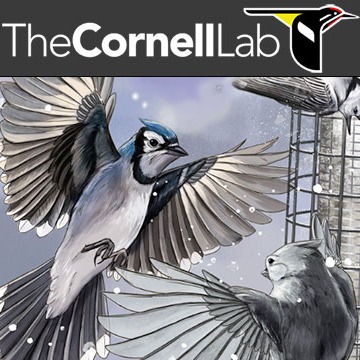
A displacement is when one bird ("the source") actively takes over the position of another bird ("the target"), either by chasing off or flying at the target. A displacement is considered successful when the source is able to dislodge the target. Some clips will have one displacement while others will have many.
What if there are multiple individuals?
More than two individuals can be at the feeder, but the displacement event we are interested in is only between two individuals. It can be hard to interpret what is going on and how group numbers are influencing a displacement for interactions with more than two individuals. Also, keep in mind we aren't interested in what can be considered "accidental" displacements in which a bird flies to the feeder suddenly, scaring off all of the birds that were there. Keep it simple and only note obvious displacements that are between two individuals.
What if the video clip stops "mid-displacement"?
Don't record it. Who knows how the displacement would have played out.
What if I see other types of interactions?
Displacements are one of many interactions you may notice at the feeders. If you want to record other things you see besides displacements, click "Done & Talk" to comment on the clip.
Why is the list of bird species so limited?
The clips span the winter season, a time when only residents are seen at the feeders. We've only ever observed the species that we included in the list available for you to select from. But, if you see anything new, make sure to click "Done & Talk" to let us know!
Why are you asking about weather?
When it rains or snows, the environment becomes a harsher place for the birds to live. Their energy requirements go up and their natural food supply may go down. This means that they may visit the feeder more or the food at the feeder becomes more valuable. The number of individuals, species, and the frequency of interactions may change as a result.
Who's that in the video?
That is Benjamin Walters, the Communication Specialist for Bird Cams. He's part of the team and refills/cleans the feeders daily.
Other questions?
If your question isn't here, head over to the Talk forum. There you can pose your question to the community and the research team. If you have a question specific to a clip, click "Done & Talk" after your classification.
Want to get more involved?
Check out the Bird Cams website, where you can watch the livestream of the FeederWatch Cam and sign up for our newsletter!
Also, Battling Birds is part of a larger project that the Cornell Lab of Ornithology is co-developing with viewers called the Birds Cams Lab. Become a beta tester for the Bird Cams Lab, which aims to bring together viewers and scientists to co-create scientific investigations. We would love your help! To learn more and join in, please visit the Bird Cams sign-up page.