


Finished! Looks like this project is out of data at the moment!
I know, we were finished! My apologies, but in cleaning this set, we noticed that 314 cards were not included in the digital upload. I have added them here so we can plow through them. Thank you!
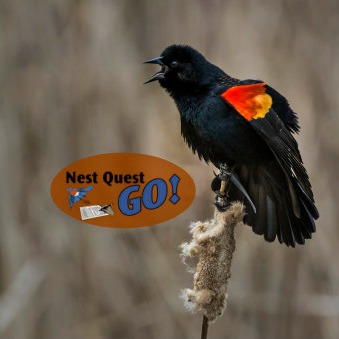
Transcribe historical nest records while exploring the life-history of these fiery-winged blackbirds!
Learn moreChoose your own adventure! There are many ways to engage with this project, including many one-question, smartphone-friendly options. Click on one of the boxes below and have fun!
Zooniverse Talk
Chat with the research team and other volunteers!
Nest Quest Go: Red-winged Blackbirds Statistics
View more statsAll Time Stats
Active Stats
Active stats provide information about currently active workflows and subjects.
Message from the researcher
The work of citizen scientists, such as those who contribute to NestWatch, is what makes our research possible. Because of the efforts of nest monitors, we are able to look at patterns over long periods of time and large geographic areas.
Nest Quest Go: Red-winged BlackbirdsAbout Nest Quest Go: Red-winged Blackbirds
Join the Cornell Lab of Ornithology's Citizen-Science Project, NestWatch in understanding the historical nesting patterns of the Red-winged Blackbirds. Their scientific name, Agelaius phoeniceus, comes from Swedish scientist Carolus Linneaus. The greek word “agelaios” means flocking, which these birds tend to do. They belong to the Icteridae family which includes orioles, cowbirds, meadowlarks, etc. Red-winged Blackbirds are highly polygamous: one male may have up to 15 different females nesting in his territory!
These nest record cards are a subset of a larger collection of more than 300,000 nest records that NestWatch is working on digitizing and transcribing. Valuable scientific questions can be asked and answered regarding the nesting behavior of birds over time by examining historical records. We hope to bring new discoveries to light using these previously hidden datasets.