


Finished! Looks like this project is out of data at the moment!
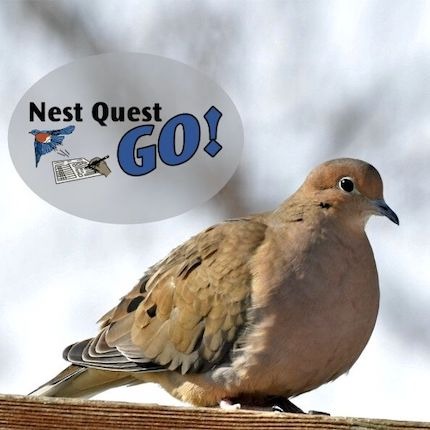
The last of the Mourning Doves are in--11,768 cards! Just like the Little Engine, "I think we can, I think we can..."
FAQ
Why are historical nest records important?
Historical records provide a glimpse into the past. We know very little about the historical nesting activity of most birds. These valuable nest cards will give researchers insight about changes in bird nesting behavior over time.
What are we hoping to learn from transcribing these cards?
The potential for learning seems endless. These cards will provide a historical perspective on the lives of birds across the United States in a variety of habitats. Specifically, the cards provide information on the reproductive success of different species, their choice in nesting sites, cowbird activity, etc.
Where did all these cards come from?
The nest record cards were a part of the North American Nest Record-Card Program. For more than thirty years, starting in the 1960s, The Cornell Lab of Ornithology distributed nest record cards to people who wanted to participate in citizen-science and monitor bird nests. Participants filled out the cards and then mailed them to the Lab where they were organized and stored. Until Zooniverse came along, entering all the data into our database was too costly and time consuming.
What if I cannot read the handwriting?
Please do the best you can with transcription. The cards will be looked at multiple times. If it is impossible to read, leave the section blank.
What if I don't see a choice that makes sense or matches the card I am transcribing?
Feel free to engage with us on the Talk channel to have your questions answered.
Other questions?
Feel free to reach out to us on the Talk channel. We will monitor discussions there and provide answers to pressing questions.
Photo credit:
Banner image: ©Bryan Calk/Macaulay Library at the Cornell Lab
Icon image: ©Estela Quintero-Weldon/Macaulay Library at the Cornell Lab
Collage & Tutorial:
©Glen Roach/Macaulay Library at the Cornell Lab
©Jake Klassen/Macaulay Library at the Cornell Lab
©️Chantal Côté/Macaulay Library at the Cornell Lab
©Carol Ann Krug Graves/Macaulay Library at the Cornell Lab
©M Schaefer a.k.a. BanyanRanchStudios/Macaulay Library at the Cornell Lab
©Jules-Alex Banville/Macaulay Library at the Cornell Lab
©James Bolte/Macaulay Library at the Cornell Lab
©David Fischer/Macaulay Library at the Cornell Lab
©Joe Wujcik/Macaulay Library at the Cornell Lab
©Bill Wood/Macaulay Library at the Cornell Lab
©Robert Stone/Macaulay Library at the Cornell Lab
©Rita Viau/Macaulay Library at the Cornell Lab
©Bill Pranty/Macaulay Library at the Cornell Lab
©Van Remsen/Macaulay Library at the Cornell Lab