Finished! Looks like this project is out of data at the moment!
Inspiring! All Nest Quest Go! projects are now complete! With heart-felt gratitude to all those who have engaged with this work over the past five years! And there are many of you who have devoted thousands of hours in volunteer time--The Cornell Lab of Ornithology thanks you! Stay tuned for more formal communication once the classification data is downloaded, processed, and added to our NestWatch database.
Research
The Cornell Lab of Ornithology, nestled in the Finger Lakes region of New York, is a world-renowned ornithological research, education, and conservation facility. Among our collections are more than 300,000 nest records from the North American Nest Record Card Program that ran from the 1960s until the early 2000s. Some cards pre-date the 1960s, likely because some naturalists were collecting this information before the formal program existed. Thousands of nesting birds, were observed by citizen scientists, who then submitted detailed accounts of bird nesting behavior.

NestWatch, a citizen-science project of the Lab, is working to transcribe these data in hopes of better understanding the nesting patterns of North American birds. Valuable scientific questions can be asked and answered regarding the nesting behavior of birds over time by examining historical records. We hope to bring new discoveries to light using these previously hidden datasets.
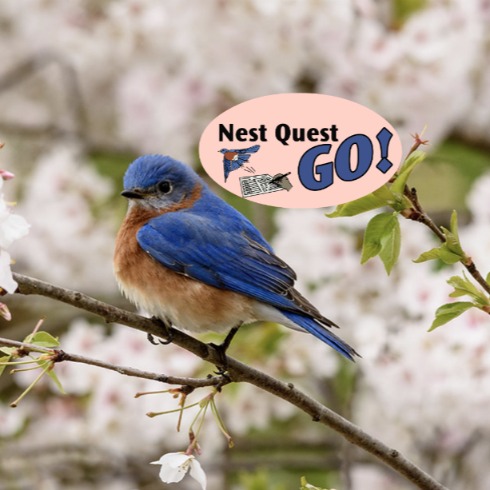
This project is our collection of the Eastern Bluebird nesting records, a collection totaling close to 60,000 cards! We will be completing this massive dataset in smaller chunks. The Eastern Bluebird was placed as a rare species in the late 1970s due to severe population declines as a result of harsh winters and nesting competition with the European Starlings and House Sparrows. However, they were taken off the rare species list in 1996 after extensive programs to establish bluebird trails with special nesting boxes that were designed to accommodate the Eastern Bluebird but keep out the larger Eastern Starling. We hope that these cards will help us better understand this decline and resurgence of the Eastern Bluebird population!
The research potential of this information is invaluable. Join us in meeting our goal of transcribing all of these nest records to better understand and protect birds. With over 30+ years of data we hope to be able to identify some of the challenges that have been impacting the lives of nesting birds such as; predation, pollution, cowbird parasitism, human disturbance, weather, etc. Along the way we hope to learn more about the citizen scientists behind the cards and preserve the valuable data they spent hours collecting. For the love of birds and people, happy transcription!