The Team
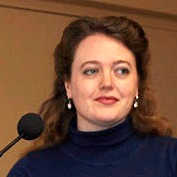
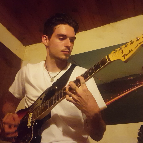
Aimee Schechter

Aimee is a postdoctoral researcher at the University of Minnesota Institute for Astrophysics. She specializes in galaxy evolution, particularly how galaxy mergers help galaxies grow and evolve through cosmic time. She is passionate about using interpretable machine learning methods for astronomy. Additionally, she is excited about the statistical power of the Euclid and Roman telescopes and what their observations of huge areas of the sky can teach us about the universe. Outside of work she cheers on the Red Sox, reads, and rides her eventing horse, Puck.
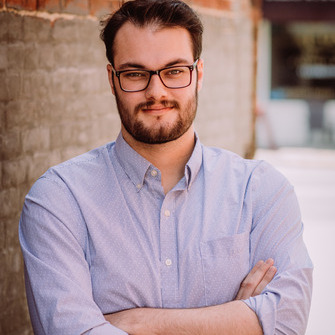
Bharath C. Nagam

Bharath is a postdoctoral researcher at the University of Minnesota Institute for Astrophysics, where he searches for strong gravitational lenses, studies supernovae and other transients, and uses generative AI to explore different galaxy morphologies. His work blends observational astronomy with machine learning to uncover new insights about the universe. In his free time, he enjoys playing tennis and stargazing.
Kameswara Mantha
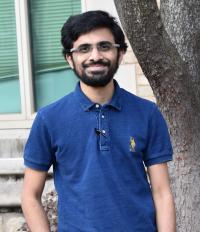
Kameswara is currently a researcher at the University of Missouri, Kansas City and a former postdoctoral researcher at the University of Minnesota in Twin Cities with the Zooniverse citizen science platform team. He is working on developing human-computer optimized, novel deep-learning based anomaly detection frameworks. He is interested in the growth and evolution of galaxies and galaxy collisions (aka. mergers) and their role in the overall growth and development of galaxies over the Universe's history. He also specializes in developing human-computer optimized, novel deep-learning based anomaly detection frameworks and applies them to imaging data from large scale galaxy surveys.
Hugh Dickinson

I work as an astronomy lecturer at the Open University in the UK. Modern scientific instruments can (and do) provide us with abundant data that are both exquisite in their precision and challenging in their analysis. I'm excited by the many ways that human beings and computers can work together to help solve some of the trickiest and most intriguing problems in modern science.
Claudia Scarlata

I am a professor at the University of Minnesota Institute for Astrophysics, where I use the data from the WISP survey to study the evolution of galaxies. I am also involved in the NASA/ESA Euclid mission, which will obtain very similar data over a much much larger area of the sky.
Lucy Fortson
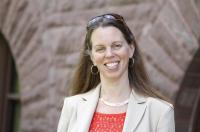
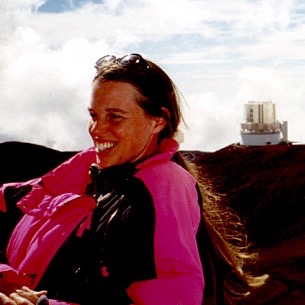
I am an Astrophysicist at the University of Minnesota Institute for Astrophysics and a co-founder of the Zooniverse platform as well as PI of the Zooniverse@UMN group. I am interested in galaxy evolution, including clumpy galaxies, black holes and the jets of material beaming from the centers of active galactic nuclei.
Tom Donlon

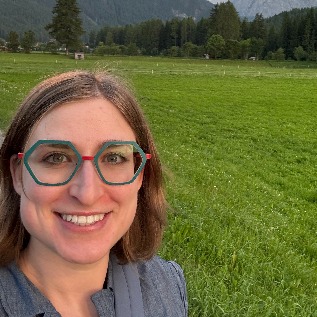
Tom is an astrophysicist at the University of Minnesota Institute for Astrophysics interested in a lot of things - pulsars, variable stars, dark matter, and how these objects relate to the structure of our Galaxy. He works on creating new types of experimental projects at Zooniverse, and also enjoys games, movies, and writing in his free time.
Billie

The dog in the tutorial is a bluetick coonhound named Billie, rescued by Aimee (one of the astronomers working on this project) and her family in 2020. She was found on the side of the road, abandoned, after likely having puppies. Though she was very skittish after being rescued, she now lives a happy life with the Schechter family in Massachusetts. Her favorite hobbies are sunbathing, walking at the pond, and begging the mailman for treats.